
Health
1488
Music therapy The pinnacle of Ottoman medicine
The legendary origin of music therapy dates back to the Covenant of the Ancients, where Prophet David cured the mentally depressed King Saul by reciting divine verses accompanied by a musical instrument. In Anatolia, the Phrygians used to treat trance-like states observed in their religious ceremonies by playing the flute. Nur al-Din Hospital, established in 1154 in Damascus by Nur al-Din Zengi, the Atabeg of the Seljuk Empire and one of the earliest Turkish-Islamic hospitals, used music to treat mental patients. The first chief physician of the hospital, Bahili, was also a musician who examined the effects of music on the treatment of diseases. For this reason, the Turkish ruler Nur al-Din Zengi appointed him as both his personal physician and the chief physician of the hospital he established in Damascus.66 As can be seen, the origins of music therapy go back to ancient times.
In Turkish medicine, music therapy was at an advanced level in terms of breadth and scope. The Turks readily adopted and implemented the information they deemed appropriate for medicine and human health.
Music therapy was not an invention of Turkish physicians, but this therapeutic approach had evolved in the hands of Turkish physicians. The connection between music and healing had been known for a long time. In İstanbul's Fatih and Edirne's Bayezid bimaristans67, music psychotherapy was applied. It was observed that patients calmed down in the face of the harmony of music, forgetting their distress, and were treated through musical melodies.
Our physicians interpreted the pulsations of the pulse, showing variability in fever and other effects in many diseases, and derived some meanings from them. Skillful physicians and experienced scholars knew that there was a connection between human pulse and the rhythm and mode of music. Through this knowledge, the pulsations of the pulse were considered to correspond to a mode and melody. Thus, each dynamic state of the pulse, such as its decrease, increase, or expansion, was associated with a musical mode, and music therapy began in this way.
As is known, in our music, rhythm is composed
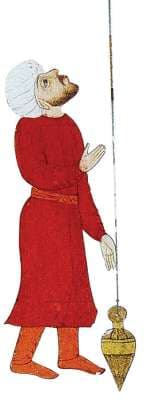
Picture 1 One of the albums Kalender Pasha presented to
Sultan Ahmed I. Ahmed I
Album, Topkapı b. 408
of a series of beats. The beat is the lengthening and shortening of melodies. The special style and a certain number of these beats constitute the musical rhythm. In other words, musical rhythm is the measure of melodies indicating specific beats and times. It was observed that irregular or frequently interrupted pulses, based on this principle, led to undesirable results.
The Turks had adopted the principles of music therapy from the Arabs and Iranians. Especially the works of great Turkish scholars like al-Farabi (870-950) served as guides for our music. It had reached the point where it was said: “A physician who does not understand music cannot be
knowledgeable in medicine and competent in his profession, unable to diagnose illness.”
In medieval Western society, those showing signs of mental illness were thrown into fire, subjected to torture, and thus it was believed that their souls were saved. In 16th-century Europe, mental problems were not recognized as an illness. In 1818, in France, patients with mental disorders faced treatment worse than animals and criminals.
In contrast to the approach of Western society, the first fully equipped hospital in the Islamic world was built in the year 707 by Umayyad
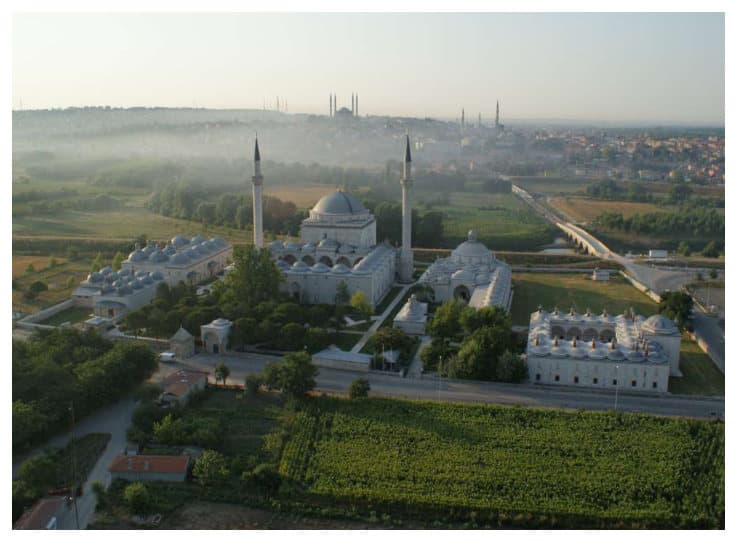
Picture 2 Bayezid II
complex.
Caliph Abd al-Malik. Special rooms were constructed in this hospital for the isolation and treatment of lepers and mentally ill patients. The first hospitals dedicated to the treatment of both mental and physical illnesses were established in the Islamic countries during this period, and the initial significant treatment methods were developed in this era.
Before the Seljuks, during the Umayyad and Abbasid periods, it is known that many hospitals were built from Damascus and Baghdad to other regions where Islam spread. However, none of these hospitals have survived as structures to the present day, and there is no clear information in
the sources of that era about medical education being conducted in these hospitals. The oldest surviving institutions related to hospitals and medical education in the Islamic world, such as the Nur al-Din Hospital in Damascus (1154) and the Gevher Nesibe Hospital and Medical School in Kayseri (1206), were established during the Seljuk period. It can be said that the most extensive information about medical education in Islam belongs to the Seljuk period. The Nur alDin Hospital and Medical School in Damascus can be described not only as an institution where clinical lessons were given at the bedside of patients but also as a pioneering establishment in
Picture 3 Detail from a c. 1570 miniature, a
young man playing
the kopuz. Rijkmuseum.
European medicine, unlike Medieval Europe, in the humane treatment of mental patients. It played a leading role in the medical treatment of mental illnesses, considering them as medical cases, using medications, and even music therapy.68
With the construction of the II. Bayezid Complex in Edirne by Sultan Bayezid II (1484-1488), a new era in this field began. The II. Bayezid Hospital had a music room in addition to six winter and six summer patient rooms arranged around a central courtyard with a pool and a big dome spanning the center. The building had perfect acoustics for music therapy. Three days a week, the ten-person musical group's concerts could be heard throughout the building without any reverberation.69
This hospital reached the pinnacle of music therapy in history. Because, prior to this, the use of music in treatment in hospitals had not been organized in such a systematic manner. Not only music but also the sound of water, possibly complementing and enhancing its effect, was used to relax people. The consideration of a music stage in the construction of this hospital and the significant emphasis on the acoustics of the environment demonstrate the importance given to music therapy.70
Turkish classical music included instruments such as the kus71, drum, zurna, naqareh72 and others. The military band, known as the Mehterhane, consisted of the zurna, drum, trumpet, naqareh, cymbals, and kus. The Mehteri Hakânî would give concerts in hospitals on specific days and times of the week. Additionally,
Picture 4 Musical ensemble
consisting of 10 people at
the Sultan Bayezid II Complex Health Museum
hospitals had their own musical ensembles, including instruments mentioned earlier, as well as the ney, violin, musikâr (an instrument consisting of a series of whistles), tanbur, and def, among many other musical instruments and vocalists.
Musical instruments and the styles of performance (modes) were thought to have specific effects on various temperaments, and accordingly, modes were assigned to specific illnesses. For example, Rast was considered suitable for paralysis, Irak for those with a hot temperament, Isfehan for enhancing mental clarity and intelligence, and Rehavi for those
with headaches and discomfort.
Besides the specific effects of modes, modes were also designed based on temperament and attire: Irak mode and similar ones were considered suitable for those with dark complexion, warm temperament, and active disposition; Rast and similar ones were suitable for those with a cold temperament and blond hair, and Kucek mode was deemed suitable for those with a cold disposition and fair complexion.
In this way, not only were distinctions made between music modes and sections at length, but also a separate section was created for different
Picture 5 A miniature by Abdullah Bukhari: Ottoman
instrumentalists at the
English court.
nations: for the Turks, Uşak and similar ones; for the Arabs, Hüseyni and similar ones; for the Persians, Irak and similar ones; for the Rum73
and Franks, Buselik.
All of these indicate the following: In the past, Turkish physicians, believing that music was the nourishment of the soul, felt the need to delve into and work in this field, and this is what is essential to know. Undoubtedly, music therapy has become a pursuit of modern medicine as well. Since music therapy is recognized as a branch of contemporary medicine, it is essential to acknowledge that the development and value of this method owe much to the existence of a
form of treatment that the Turks highly esteemed in the past. Our desire to allocate an honor share for our ancient medicine is based on this point alone.74
Source: Innovation, Inventions and Quests Among the Turks