

Science & discovery
1826
Niẓâm-ı Cedîd (New Order) As the Janissary Corps was destabilized, the need for new army arose.
The last quarter of the 18th century, marked by the Treaty of Küçük Kaynarca (1774), the annexation of Crimea by Russia (1783), and the treaties of Ziştovi (1791) and Yaş (1792), witnessed a series of wars that began in 1768 and highlighted the absence of any military value in the janissary army. When Sultan Selim III ascended to the throne on April 7, 1789, he faced an untrained, undisciplined “janissary army” incapable of engaging in warfare.
At an extraordinary meeting held on the Maçin plain with the participation of all janissary commanders, including the Janissary Aga, and other commanders (August 11, 1791), it was explicitly stated that resistance against the disciplined soldiers of the enemy with our undisciplined army was not feasible. It was clearly expressed that in the current state of distress, victory could not be achieved until the day of judgment. Under these conditions, it was requested from Grand Vizier Koca Yusuf Pasha to inform the Sultan that the army could not engage in war. A memorandum was prepared on this
matter, endorsed by everyone's signature, and sent to İstanbul. Thus, an unprecedented “boycott” incident occurred in Ottoman history, and the Peace of Yaş with Russia was signed under these conditions on January 9, 1792.
It is known that the period of renewal and restructuring, known as the Niẓâmı Cedîd, was initiated after this event (1792-1807), and Selim III, while still in the process of preparing for army reform, requested reports on the state order from leading statesmen. Some time after the arrival of the army in İstanbul (April 2, 1792), all the statesmen and soldiers involved in the boycott, especially Grand Vizier Koca Yusuf Pasha, were dismissed. The establishment of the Niẓâmı Cedîd army, equipped, trained, and disciplined in the European style, was initially met with silence within the prevailing psychological atmosphere. The comprehensive program of the Niẓâmı Cedîd envisaged the restructuring of the state in all areas with all its institutions. The narrow execution of the reforms by a limited cadre, the inability of the new authorities to free themselves from old habits
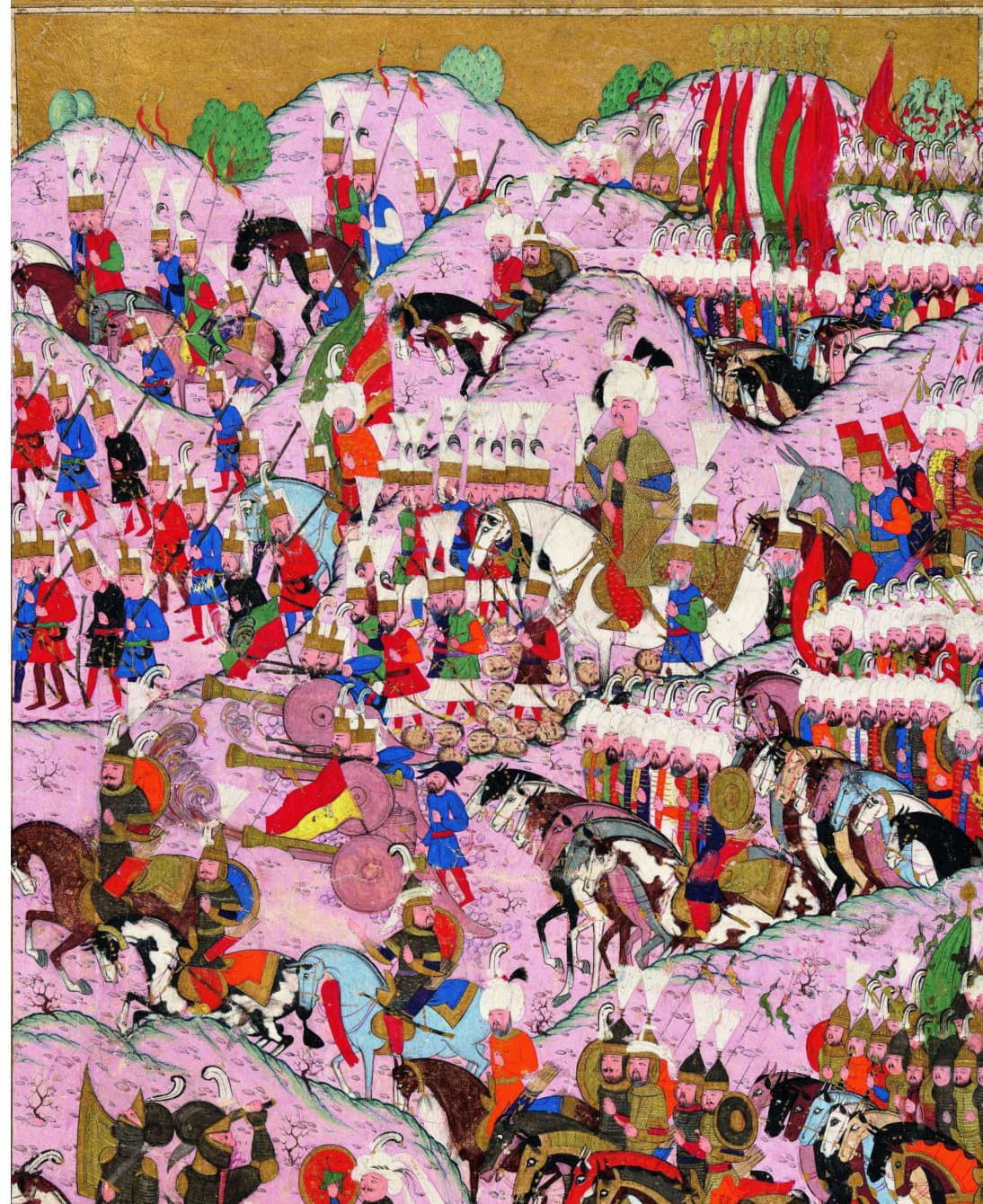
Figure 1 Suleiman the Magnificent on the Plain of
Mohaç, Hünername (Book of Talents), Topkapı Palace,
H.1524
and bad practices, and the complete neglect of the old institutions, especially in terms of salary payments, have further deepened the existing division between the privileged position of the new institutions.
Finally, in February 1807, the arrival of a British fleet threatening the Ottoman Empire up to the outskirts of İstanbul dealt a deadly blow to the authority of Sultan Selim III, which had already been severely shaken by janissary opposition in the years 1805 and 1806. The departure of the army from İstanbul for the Russian campaign on April 12, 1807, provided an opportunity for the uprising known as the Kabakçı Mustafa Rebellion, which took place from May 25 to 29. Sultan Selim III, despite the considerable expenses and numerous hostilities incurred over many years, was unable to use the army he had prepared neither in war nor to defend his own rights. Ultimately, he abandoned his reforms and abdicated the throne. In the years 1807 and 1808, despite the ongoing state of war, two major uprisings occurred, leading to the executions of two sultans (Selim III and Mustafa IV) and three changes (Selim, Mustafa, and Mahmud II). The janissaries, who were also responsible for the creation of the Charter of Alliance document (October 29, 1808), within three months ruthlessly eliminated Alemdar Mustafa Pasha, whom they considered an enemy (November 16, 1808). After the 1807 uprising, the Hücceti Şer’iyye, organized with the participation of the religious scholars (May 31, 1807), served as a kind of immunity shield for the rebels. The decision of non-prosecution, coupled with the assurance that they would never be held accountable, became a kind of precedent for the recent coup plotters.
The 1807 uprising, although commonly referred to by the name Kabakçı Mustafa, emerged due to the changes in ruler and politics caused by III. Selim‘s approach to France. It erupted while the army was
yet to embark on a campaign. The influence of the English and Russians, known to have clandestinely provoked and supported the opposition, should also be taken into account. Despite being associated with Kabakçı Mustafa, the core of the uprising consisted mainly of midranking officers. As they were considered the victims of Selim III‘s reforms, it was important for them to win over the ulema to their side, and this was successfully achieved, even by Sheikh-ulIslâm Atâullah Mehmed Efendi, who at first tried to save face by appearing unwilling to participate. The November 1808 uprising continued with the destruction of all the barracks and other buildings related to the Niẓâmı Cedîd, which had been untouched in the May 1807 uprising. Ultimately, it led to the execution of Sultan Mustafa IV in the cage, as the rebels attacked the palace. Meanwhile, the destruction of the printing press next to Selimiye Barracks on November 17, 1808, indicates the recognition of the press as an effective weapon and institution of the Niẓâmı Cedîd. Besides printing textbooks for engineering education, the press was also known for publishing works introducing the new order. As a result of the measures taken by Mahmud II, who personally experienced the great dangers posed by the alliance of the military and the scholars, they had to take the side of the sultan in the last rebellion in 1826, albeit somewhat forcefully.
It is important to realize that in 1791-1793, about 40% of the 1110 businesses and shops in İstanbul were janissary-affiliated, that they employed people related to their own communities and associations, and that janissaries were preferred as partners in other cities in order to take advantage of their position. In short, we are talking about the Janissary Corps, which seized the market in “mafia-like” ways, tied the state‘s hands, and virtually took it as a hostage; refused to allow the establishment of a new one even though it had
long been no longer involved in military service; was useless in wars; could not suppress internal uprisings; and blocked the way for all kinds of renewal as it was known for its rebellions and coups.
Mahmud II envisioned the formation of a modern state that would not only be defensive but also deal with major internal problems, partly due to the fragmentation of central power and partly due to the military and economic interventions of European states. It should not be forgotten that the radical reforms undertaken for this purpose after the abolition of the Janissary Corps kept the state alive for nearly 100 years, despite all the disastrous developments until the first quarter of the 20th century. The janissaries, who increasingly attributed the successes in the wars during the founding and rising stages of the Ottoman Empire to themselves with growing exaggeration over time, later emerged as an obstacle to the restructuring of the state and, consequently, the military institutions. They became a hindrance to the reforms needed in subsequent periods. Over time, they played a role in various uprisings, the dethronement of sultans, and began to be associated with a growing negativity on the historical stage. As a result of a bloody state intervention on June 14, 1826, after a prolonged period of delay, these reforms, various defeats, and the loss of territories were attributed to them, leading to their eradication from history.215
The Janissary Corps, which deviated from the purpose of its establishment, was abolished and replaced by a new trained military organization called Asâkiri Mansûrei Muhammediye216
Based on the necessity of having a standing army at all times to protect Muslims from enemies, the Janissary Corps was established as the Ottoman Empire‘s army. In the past, it valiantly faced the enemy and achieved numerous conquests through
perseverance, resilience, and obedience to their leaders. However, internal strife arose among them, leading to disobedience and evasion from military service. Consequently, many fortresses and territories fell into enemy hands. Observing this, the enemies gained courage, encircling and defeating the Islamic nation from all sides, attempting to disintegrate and conquer the land. In response to this critical situation, two attempts were made to draft educated soldiers to eliminate the lack of education among Ottoman soldiers, but these efforts were thwarted by the janissaries. Despite being a deep-rooted institution, the Janissary Corps continued to exist without any objections. However, instead of reforming themselves, they sometimes complied and sometimes rebelled, engaging in disorder and
banditry. Meanwhile, the enemies, not idle, attempted to destroy the Ottoman State. To address this, a gathering was held at the office of the Sheikh-ul-Islâm, involving scholars, statesmen, and janissary officers. In the Meclis-i Şûrâ (Consultation Council), it was decided,
within the framework of religious unity, to draft obedient and educated soldiers. It was determined that this was necessary to rectify the lack of education among Ottoman soldiers, identified as a fundamental reason for the enemies‘ triumph over Muslims.Despite the provision that no harm would be done to the interests of Janissary Corps members, training commenced for one hundred and fifty soldiers from each janissary regiment. However, while their weapons and uniforms were yet to be distributed, the janissaries rebelled. They stormed the office of the Janissary Agha, the government center, and other locations, looting and vandalizing. They even tore apart the Quran, expressed their unwillingness for education, and engaged in unruly behavior, rebelling against the Sultan. In response, former and current Sheikhul-Islâm, judges, statesmen, officials, and believers gathered at the Imperial Palace. They
took the banner of the Prophet Muhammad (peace be upon him) to the Sultan Ahmed Mosque, urging people to gather under this banner. Despite these efforts, as the janissaries persisted in their rebellion, officials were appointed to shed their blood in accordance with Sharia law. The barracks were set on fire, and it was understood that the rebellion was not only the work of the lower ranks; there were supporters within the Janissary Corps. Therefore, both the instigators and the rebels were punished. Among those executed, individuals were observed wearing infidels medals and carrying crosses on their arms. It was evident that the unruly ones prevailed over the honorable, leading to the realization that there would be no benefit to the country from the janissaries henceforth. Consequently, the Janissary Corps and the name of janissaries were erased, and a new trained military force named Asakiri Mansurei Muhammediye was established, dedicated to serving religion and the state, capable of combatting enemies through jihad. A commander with the title Serasker was appointed to lead them. In order to ensure that loyal members of the Janissary Corps and those receiving wages from the corps did not suffer, various regulations were enacted. A decree was written to the judge of İstanbul instructing him to gather all neighborhood imams to inform the public about these matters and to provide guidance.
August 4, 1826
The Muslim community is well aware that the initial emergence of the religion and state of Prophet Muhammad, as well as its subsequent expansion to encompass the East and the West, was made possible through the implementation of Sharia and the sword of jihad. It has always been a necessity and requirement to have Muslim soldiers and warriors ready to resist the enemies
of this religion.
Therefore, in our venerable and eternal Ottoman Empire, the Janissary Corps was initially established. In past eras, the janissary soldiers who lived during those times bravely confronted the enemy in various jihad and ghazwa campaigns. Through their perseverance, resilience, loyalty, and obedience to their leaders (ulü’lemre), they played a crucial role in achieving numerous conquests.
However, as time went by, their former obedience turned into disobedience, and they became disorganized and disobedient due to the appearance of all kinds of falsehoods and fabrications in the campaigns that had been going on for a hundred years, and they committed the shame of running away from the war and thus caused all these fortresses and countries to remain in the hands of the enemy.
As the enemies of religion saw this state of affairs, they attributed it to the fact that the Islamic nation was completely incapacitated and disintegrated, and, Allah forbid, with the thought of completely defeating and disintegrating the Islamic nation and homeland, they increased their demands and claims and became worse and worse day by day, and it reached the point that we were surrounded on all four sides by enemy infidels.
In this situation, it has become inevitable for us to mobilize our Islamic feelings and find a way to overcome our enemies for the sake of our religion.
As repeatedly observed and experienced in past wars, it became evident that the easy victories of the unbelievers against Muslims stemmed solely from the training of disciplined soldiers. Therefore, both after the completion of the two hundred and two campaigns and subsequently, attempts were made twice to establish a system of
trained soldiers. However, the janissaries, finding themselves useless and unwilling to accept these soldiers, rebelled and thwarted these attempts to establish a military order. Due to the numerous disgraceful incidents they initiated, they caused the deaths of several sultans.
Nevertheless, despite all these, the janissaries were still perceived as a deep-rooted institution, and no action was taken to put an end to their existence. Up until now, they have continued to either comply or engage in disorder and banditry as they pleased. Although we have tolerated them among ourselves, the enemies of our religion have not remained idle. Observing our situation, they have taken the opportunity to surround us and, Allah forbid, have begun working towards our complete destruction.
Therefore, recently, in a meeting at the office of the Sheikh-ul-Islâm, attended by all viziers, scholars, statesmen, and janissary officers, the situation was openly explained and communicated to everyone. The verdict of Sharia in this situation was asked, and in the end, based on the fatwa of Sharia and the document signed and sealed by everyone (hücceti şer’iyye), it was concluded that, solely with the pure intention of preserving the religion of Allah (îlâyı Kelimetullah), Islam soldiers must first adopt loyalty and obedience to the faith in response to the cunning and schemes that allow the triumph of unbelievers. Secondly, they must acquire military skills through education and training. It was determined that there was no other solution, and within the framework of this general consensus and religious unity that emerged, the following was decided:
It was decided to enlist only one hundred and fifty salaried, trained soldiers of eşkinci from each janissary battalion, without harming any of the
procedures and laws of the Janissary Corps that had been in effect since time immemorial, and the enlistment of Eşkinci Ocağı was initiated with the compulsory expenditure of such an amount of money from the treasury for their salaries. It was also announced and publicized that no one would be harmed in terms of their salary certificate (esame) and daily wage, and that anyone who spoke or acted contrary to this general opinion and unity of opinion would be punished according to the fatwa of the Sharia. Afterwards, training and education started last week and the recruits were given their weapons and clothes.
However, despite all these religious warnings and recommendations, there was no benefit, and the janissaries rebelled on the Thursday night before, first storming the office of the Janissary Chief, then the government center (Bâb-ı Âli), and other locations, looting and plundering. They even went so far as to cut the Quran with a knife, committing various acts of disgrace and ugliness, explicitly expressing their rebellion by saying, “We do not want education and training.” They openly demonstrated their unruliness and excesses, declaring their disobedience and lack of loyalty to Sharia, fatwa, the state, and the scholars. Without hesitation, they misused the weapons provided by the state for their training, daring to rebel against the Sublime Ottoman State, engaging in the shameful act of uprising against the Sultan.
The actions of these people were deemed nonreligious and sectarian, so the former and current Grand Muftis, Chief Judges, all scholars, state officials, and officers, along with other members of the Muslim community, immediately gathered at the Imperial Palace. They took the banner of the Prophet Muhammad (peace be upon him) and marched to the Sultan Ahmed Mosque. They all assembled there, proclaiming, “Those
who possess faith and belong to the community of Muhammad should seek refuge under the banner of the Messenger of Allah and take shelter under the rule of the Quran and the Sharia.” This announcement was made by sending messengers in all directions. Although the people of faith and the Muslim community rushed with heart and soul to come under the banner of the Prophet and seek refuge in the rule of the Quran and the Sharia, the bandit groups persisted in their evil gatherings. They continued to insist on their meetings with malicious intentions, opposing religion and the state. God forbid, they dared to overturn the Muhammadan State, trampling underfoot the honorable and faithful people, ultimately leading to the captivity of these believers in the clutches of the enemies of religion. As a result, officials were appointed to shed their blood in accordance with the requirements of Sharia, and their barracks were set on fire. Finally, Almighty Allah, in His wisdom, subjected them to the sword of Sharia, and they faced the consequences of their actions.
Even though this great turmoil seemed to be the work of a group of troublemakers and riffraff, through the investigation, it was revealed that some members of the Janissary Corps supported them, including troublemakers, provocateurs, and individuals opposed to religion and the state. It became apparent that they were behind these events, and this revolution and uprising were their doing. Each of them was captured by name, and they were punished in accordance with the requirements of Sharia. Those who emerged as perpetrators of wrongful actions from the actual bandit group were also apprehended and subjected to the punishments they deserved. However, from all the events that have unfolded so far, it is now understood that the principles of merit and obedience that were the foundation of
the initial establishment of the Janissary Corps have, over time, transformed into the opposite— misconduct and banditry. The name and title of Janissary and comradeship have come to carry the same meaning as banditry, and the misconduct of these individuals has prevailed over the righteous among them. In fact, among those who were arrested and executed (politically) during this period, there were some who had both the seventy-five insignia and the infidel cross on their sleeves. Since various nations were mixed among them and there were always such infidel spies disguised as Muslims, repeated warnings to remove them were not heeded, and it was not possible to separate and expose them. Among their leaders and officers, it became apparent that even the honorable ones who did not conform to them were helpless against their influence. Since it was evident that maintaining their names and implementing measures for their improvement would not be beneficial or fruitful, the grand muftis, chief judges, scholars, and everyone who desires the well-being of religion and the state gathered today under the banner of the Prophet at the Sultan Ahmed Mosque, within the framework of the consensus emerging according to the requirements of Sharia, and decided:
In order to improve the state of the world, it has been decided, within the framework of a consensus emerging according to the requirements of Sharia, to erase the name and fame of the Janissary Corps. The old laws have been renewed in a different way, and henceforth, the name of janissary has completely disappeared. In its place, a well-disciplined military force called the Asakir-i Mansure-i Muhammediye has been
established, which is beneficial for religion and the state, ready to respond adequately to enemies in warfare and jihad. Valuable Vizier Hüseyin Pasha, currently serving as the Governor of Hüdavendigâr Province, has been appointed as the commander-in-chief, residing in the position of the Janissary Agha. The name Kapı Agha (Agha of the Gate) has been changed to Bâb-i Ser’askeri (or Serasker Kapısı, meaning Gate of the Serasker), and from now on, new recruits will be stationed in barracks and garrisons. The janissary agha, katar aghas, and section aghas have been abolished in the same way. Mehmed Agha, currently serving as the janissary agha, has been granted the rank of Mîrâhûr-i Evvel and the position of Dergâh-ı Âli Kapıcıbaşı. The agha serving as Kul Kethüdası has been given the rank of Beylerbeyi, and his name has been appointed to the mentioned position. The titles of Dergâh-ı Âlî Kapıcıbaşı have been given to zağarcıbaşı and samsoncubaşı, and loyal section aghas have been granted titles of hassa silâhşorluğu, along with gifts and salaries from the Sultan, depending on their situations. Those who hold the position of yayabashi will now be considered as Ottoman State tenants of the same rank as those who possess zeâmet, and they will be employed in other services of the Ottoman State. Those from the Janissary Corps who possess daily wages and salary documents (esame) will continue to receive their full wages for their entire lives without any reduction, thanks to the merciful Sultan’s sealed documents, which they will present according to the requirements of the collective salary table. May their lives continue without harm or loss to anyone. Henceforth, it has been unanimously agreed upon by all believers, both large and small, of the Muhammadan community, scholars, and members of other military organizations, and all people, to look at each other as brothers in religion. There should be no division or distinction among them. Elders should look at the younger ones with mercy and compassion, and the younger ones should submit to the elders in every situation with obedience. In
this auspicious endeavor, the primary goal is to elevate the religion of Allah (i’lâyı kelimetullah) and to perpetuate the religion and Sharia of the last of the prophets. Everyone has agreed to be in consensus and unity in this good deed until the time appointed by Allah, and no one should dare to act or speak against it. If anyone does, may the responsibility fall on them, and may they be immediately dealt with by the sword of Sharia, as desired by Allah. May everyone be successful in this endeavor through the mercy of Allah. This is the unanimous decision of all. Immediately thereafter, the fulfillment of their requirements was initiated, and orders were issued, published, and announced to the three parts of Rumelia and Anatolia and to the entire Ottoman country.
Therefore, bring all the neighborhood imams into your presence, gather them, and explain the situation, issuing each of them a signed copy of this noble decree. Instruct them to go to the mosques and prayer places in their neighborhoods and read this decree to the public. Emphasize that, solely for the preservation of Muhammad’s religion and state, and in accordance with the rulings of the Quran and Sharia, the name and reputation of the janissaries have been completely abolished. In its place, a new army, named the Asâkir-i Mansûre-i Muhammediye, will be established through the creation of new laws. Assure them that the salaries and wage documents of individuals will not be harmed in any way, and those who present their sealed documents included in the collective salary list will continue to receive their daily wages as before. Stress that, regardless of the amount, their daily wages will be paid for the rest of their lives.Inform them that individuals with religious faith and those who obey and submit to the Book of Allah and Sharia should appreciate and be thankful for this matter. Encourage them to express gratitude and pray continuously for the prosperous Sultan. Furthermore, instruct them to explain and emphasize the value of this matter to the people and to urge them to pray for the well-being of
Hâlife Hazretleri (The Caliph, His Holiness), reminding them that those who speak contrary to this will suffer both in this world and the hereafter. Similarly, you should pay constant attention and oversight to this matter from a Sharia perspective. Ensure that the requirements of Sharia are consistently fulfilled, and be vigilant in upholding Sharia in all circumstances.
This is how the edict was addressed to His Eminence, the virtuous Qadi of İstanbul, and this text is a verbatim copy thereof.
1241
HAT, 1318/51356-C
Source: Innovation, Inventions and Quests Among the Turks