
Culture & communication
1847
Telegraph Mors, the inventor of the telegraph, described Sultan Abdülmecid as the
first European statesman to appreciate the significance of his invention
The efforts to organize the postal administration in a modern sense during the reign of Mahmud II bore fruit after his death, leading to the establishment of the Postal Ministry on October 23, 1840. The Postal Ministry aimed to carry letters, parcels (money), and samples (packages) that were subject to postage without distinction throughout the Ottoman Empire, along with state documents. In pursuit of this goal, the first postal services were launched from İstanbul to Edirne in the Rumelia region on October 28th and to the Anatolian region on November 2, 1840. Within a month of its establishment, on November 16, 1840, the first postal regulations, outlining the principles and working conditions to be followed by the new organization, were put into effect. This initial postal regulation was enacted by adapting the French Postal Law to the conditions of the Ottoman State.
In the second half of the 19th century, we encounter (electrical) telegraphy as a new development in this field. After the unsuccessful attempt in 1839, two successful telegraphy experiments were conducted in the Beylerbeyi
Palace in 1847. First, in the presence of Sultan Abdülmecid, and the next day, before the statesmen of the country.235 On August 9, 1847, the American Smith successfully sent a message in the presence of Abdulmecid using machines set up in two separate rooms of the Beylerbeyi Palace. Following the second demonstration the next day, attended by prominent figures from the Bâb-ı Âli, Sultan Abdülmecid, quite pleased with the new machine, inquired about the type of reward that could be given to Smith. Smith suggested that it would be more appropriate to send the reward to the inventor, Morse. Consequently, in early 1849, a medal with 130 diamonds elegantly placed around the initials of the Ottoman Sultan‘s name was sent as a decree of appreciation. Learning of the honor from newspapers and friends, Morse, after a one-year delay, received the decree and medal and sent a responsive thank-you letter to the Sultan. In a letter written in 1863, Morse praised Sultan Abdülmecid as the first European statesman to appreciate the value of his invention.
After the Ottoman Empire, Morse was honored with state decorations from France and Denmark
Figure 1. Laying a telegraph
line.
in 1856, Spain in 1859, Portugal in 1860, and Italy in 1864. Following the growing interest in his new invention, a meeting was held in Paris in 1858 with the participation of ambassadors from the Ottoman Empire and some European states. It was decided to award Morse a cash prize, with each state contributing based on the number of telegraph machines it possessed. The total prize amount was set at 400,000 francs, to be paid over a four-year period. Accordingly, the Ottoman Empire was to pay its share for 69 machines, Austria 224, France 462, and Russia 115. Shortly after the decision, the Ottoman Empire took action to deliver the first installment of the reward, 5,374 francs 24 centimes, to Morse through the Paris Embassy.236
The telegraph and the steam train were introduced into the Ottoman Empire almost simultaneously. A telegraph line connected İstanbul to Europe for the first time in 1855. The first railway line started operating in the Egyptian province in 1856, between Cairo and Alexandria. In the same year, the first railway in Anatolia began operating from İzmir to Aydın. The world‘s first railway, which started operating in England, was 31 years old in 1856. Telegraph communication spread more easily from west to east; the world‘s first telegraph line, opened in England in 1855, was 18 years old.
The first telegraph line in the Ottoman Empire was an underwater cable connecting the Crimean Peninsula to Varna on the Bulgarian coast. The initial reason for laying the cable was the Crimean War, which began in 1853 as the Ottoman-Russian War. The British, at that time, laid the longest submarine telegraph cable in the world, which was 340 miles long. Shortly thereafter, they laid another cable to connect Varna to İstanbul. Construction began in March 1855, and by August 19, 1855, the line between İstanbul and Edirne was completed. The line reached Şumnu on September 6, connecting İstanbul to European capitals via telegraph wire.
The first telegraph line from İstanbul was drawn on September 14, 1855. In June 1861, telegraph traffic between Üsküdar and Baghdad was opened. Towards the end of the month, Sultan Abdülmecid passed away. Before his death, he witnessed the completion not only of the Baghdad line in the east and the Bucharest-Belgrade-Vienna line in the west but also the Thessaloniki line. Additionally, a British company obtained permission to lay a cable connecting the Dardanelles Strait to Chios and Cyprus, linking the major port of İzmir to the Chios line. However, efforts to lay the cable from the Dardanelles Strait to Alexandria were disrupted three times.
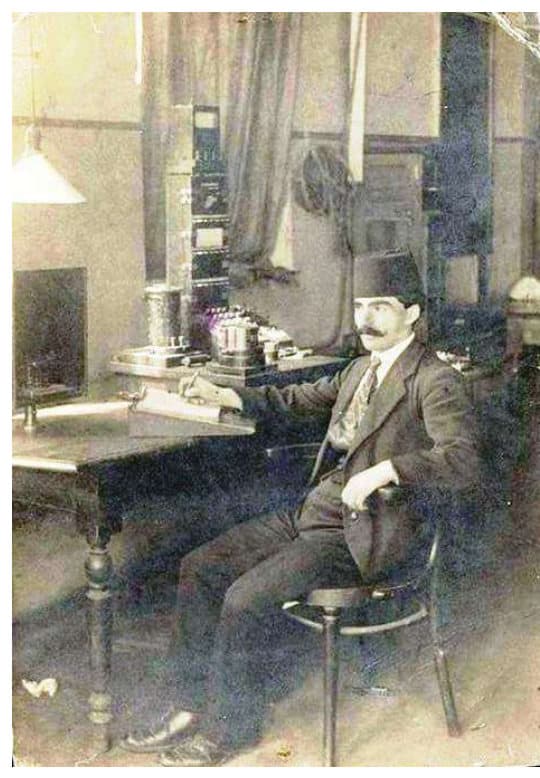
Figure 2 An Ottoman telegraph officer in the early
1900s
In the early years of Sultan Abdülaziz, who ascended the throne in 1862, the telegraph line from Baghdad to Basra and up to the Al-Faw Port on the Persian Gulf was completed. Here, the British laid the line that came from Karachi and crossed the Indian Ocean. By January 1865, telegraph traffic could pass from London to India through Ottoman territories.
During Abdülaziz‘s reign (1861-1876) and Sultan Abdülhamid‘s reign (1876-1909), the expansion of the Ottoman telegraph network continued. Branches emerged in Anatolia, and a major line extended from Anatolia to Egypt and Arabia through Syria. Connection was established between the telegraph network in Odessa and the Black Sea network. New Balkan towns were added to these lines. In 1914, approximately 5,500,000 telegrams were sent annually within the Ottoman territory.237 The Telegraph Administration, initially under the auspices of the Prime Ministry, operated as a Directorate until it merged with the Postal Ministry on September 21, 1871.238
Attendance of state officials at the presentation of the telegraph at the palace
A demonstration was conducted in the presence of the Sultan, where an example of the telegraph, used in Europe, was sent from America. The demonstration emphasized the impressive nature of the telegraph and its potential to facilitate communication. In accordance with the Sultan's order, the Grand Vizier, Sheikh-ul-Islâm, and ministers were summoned to the palace to witness the demonstration of how the telegraph operates.
August 10, 1847
As it is known by the Grand Vizierate, it was reported through the translator of the American embassy that a sample of the telegraph system
used in Europe—to be used in the Ottoman lands if it is liked—was sent from America for the Sultan to see.
With the permission of the Sultan, telegraph equipment was brought to the palace today, and the system was demonstrated in the presence of the Sultan. This system was found worth seeing, and it was understood that it would provide great convenience in communication.
Our Sultan’s orders and edicts have been issued for His Excellency the Grand Vizier, the Sheikh-ulIslâm, and the ministers to come to the Palace at four o’clock tomorrow, Tuesday, to watch how it works.
August 10, 1847
İ.DH, 153/7919
Source: Innovation, Inventions and Quests Among the Turks