

Culture & communication
1896
Cinema The western invention that reached the Ottoman Empire most rapidly
Named after the invention of the cinematograph by the Auguste and Louis Lumière, cinema became the most influential and popular mass art of the past and present century. However, the true inventor of cinema as a technological invention has been a subject of debate over the years. Cinema is not just the result of one person‘s work; it is the result of the knowledge and innovations that individuals in this field have accumulated over centuries. Therefore, the discussion of inventions in the development of cinema equipment is a contentious and complex matter. However, it is certain that the French Lumière Brothers were the ones who put the final touch on the projection of images onto the screen.
Extensive work that had been going on for many years was about to be completed in 1888. The joint work of the famous American inventor Thomas Alva Edison and William K.L. Dickson resulted in the invention of the first movie camera, the Kinetograph. However, the films shot with it could not yet be projected. Thomas Edison-William Dickson's work in this field resulted in the invention of the Kinetoscope in 1891. In the same
year, Edison patented the Kinetograph as a camera and the Kinetoscope as a viewing device. In this device, which could hold a 15-meter projection, the image could be viewed through an eyepiece by only one person.
The Kinetoscope, the most advanced cinematographic viewing device developed up to that day, achieved worldwide success. Shortly after its release, viewing parlors featuring the Kinetoscope began to open in many cities across America. Although the Kinetoscope provided an illusion of movement, it couldn‘t project the images onto a screen. Therefore, it needed to be transformed into a projection device. The ones who achieved this were the French brothers Louis and Auguste Lumière.
The six-month-long efforts of the brothers culminated in a remarkable invention named the Cinematograph on February 13, 1895. The greatness of the invention stemmed from its combination of both camera and projection capabilities. Consequently, moving images could be viewed not only through a hole but by hundreds of people on a white screen.
Figure 1 Kinetograph
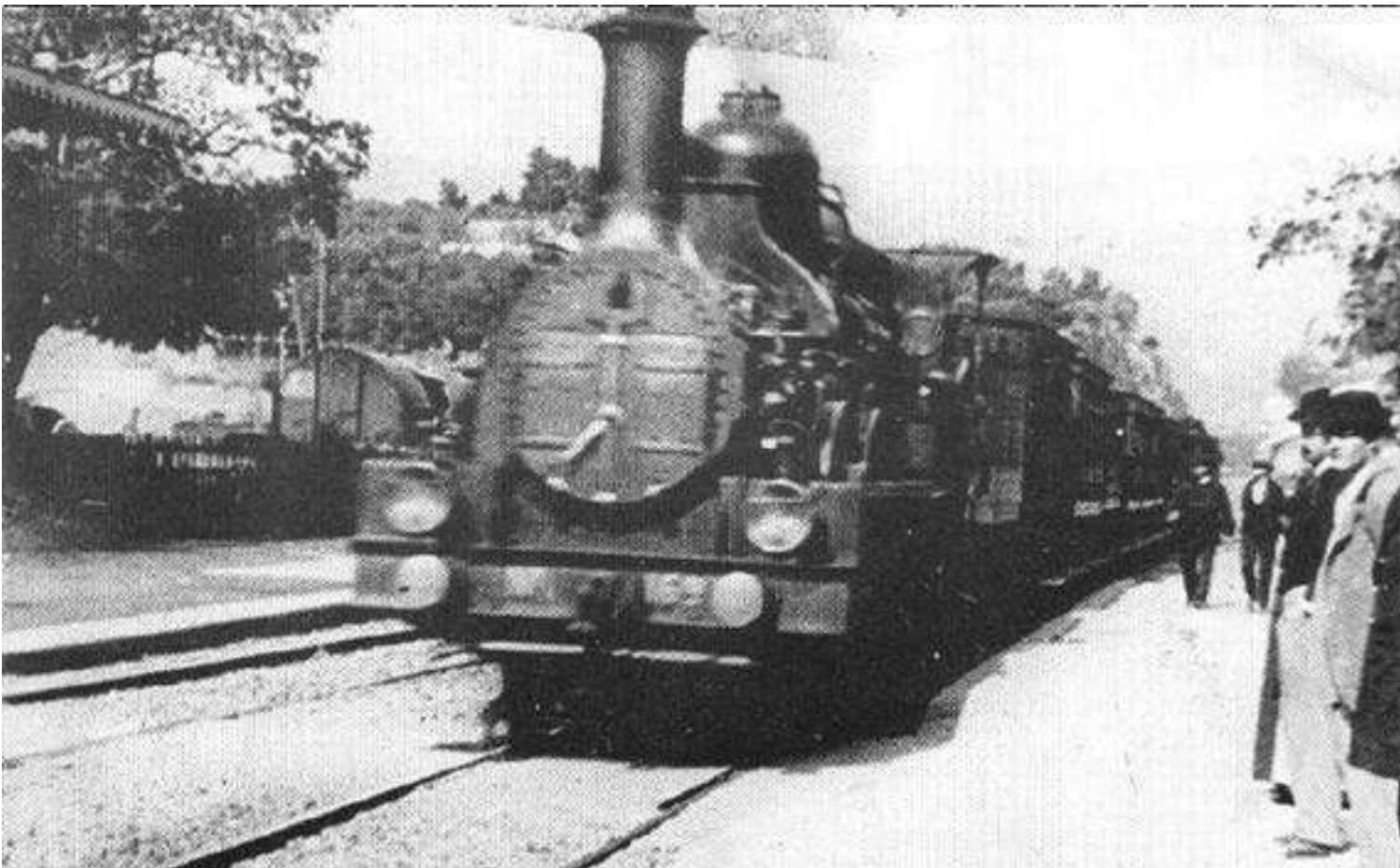
The Lumière Brothers presented their invention for the first time on March 22, 1895, in Paris. This special demonstration was accompanied by the screening of the brothers’ first film, Workers Leaving the Lumière Factory. For promotional purposes, this presentation, along with additional films, was repeated at various science and industry fairs until the end of the same year. All of these showings were organized for invited experts. The first public cinematographic screening took place on December 28, 1895. The 35 individuals in attendance witnessed this historic moment, recognized as the official beginning of cinema. The most striking films shown during the screening were undoubtedly Arrival of a Train at La Ciotat and Watering the Gardener. In the first film, a train approaching a station is seen from a distance, and as the train comes closer to the fixed camera, it gradually enlarges in the frame. According to legend, some spectators, thinking the train was actually coming towards them from the screen, screamed in fear, hid under their seats, and some even fled the auditorium. A similar reaction would be elicited a year later during
screenings in İstanbul.
After news of the screening spread, interest in cinematography began to grow exponentially day by day. The awareness of this invention among the general public through newspapers and advertisements fueled this interest. The number of cinematograph screenings reached up to 20 per day within a week or two. People who wanted to attend the screenings formed lines along the streets.280
While there are partial pieces of information regarding the first film screenings in the Ottoman territories, it is difficult to pinpoint an exact date. However, most likely, the introduction of cinema to the country took place with the first film screening at the Palace, probably in late 1896 or early 1897. Frenchman Bertrand introduced cinema to the Palace, while Sigmund Weinberg conducted the first public cinema screening. Although the Turks had an early encounter with cinema, it appears to have predominantly influenced and interested only one city, İstanbul, for a long time. By 1914, cinema had become more widespread in İstanbul, particularly in Beyoǧlu.
Figure 2 The scene of the train entering the station in the first film of the Lumière
Brothers.
However, it had also become a growing industry with increasing cinema halls and audiences, at least in İzmir and Thessaloniki. The first cinema operated by Turks was Milli Sinema, opened by Murat Bey and Cevat Boyer on March 19, 1914. In the same year, Kemal Bey (Seden) and Fuat Bey (Uzkınay) opened Ali Efendi Cinema in Sirkeci, followed by Kemal Bey Cinema in Demirkapı. While the number of movie theaters and screenings gradually increases, it is not yet possible to talk about the existence of a Turkish cinema. This is because the majority of the cinema industry was owned by minorities or foreigners. During this period, companies such as Pathé, Gaumont, and Ciné Théâtre d'Orient dominated the sector.
With the understanding of the power of cinema in making propaganda in the world, the cinema department established in the French Army in early 1915 was taken as an example by other countries, and military cinema activities began. One of the first steps towards the beginning of Turkish filmmaking was İsmail Enver Pasha's trip to Germany. Enver Pasha, who had seen the Cinema Department in the German Army and watched the military films, ordered the establishment of a similar structure within the Ottoman Army, and thus Merkez Ordu Sinema Dairesi (Military Office of Cinema) was established in mid-1915. Weinberg, who had been at the forefront of filmmaking activities in the country until then, was appointed as the head of the department, and Fuat Bey was appointed as his deputy.281
Emerging as a new means of mass communication cinema, both globally and in the Ottoman Empire, initially took on a nomadic character. Traveling filmmakers conducted screening activities by moving to different venues. Although the establishment of permanent cinemas in the world began approximately 10 years after 1895, the
practice of mobile screenings persisted even after the emergence of permanent venues.
In the silent era of cinema, intertitles were used on film strips to convey information about the film, enabling the audience to understand the narrative. The discovery and experience of cinema in the Ottoman Empire, particularly through Western and Continental European influences, led to the screening of foreign films, as there was no domestic film production. These imported films often had intertitles in foreign languages, mostly in French. In response to this situation, protests began in November 1913, demanding Turkish intertitles in films.
During the days when the protests for Turkish intertitles emerged and intensified, there were no cinema halls owned or operated by Turks. The owners/operators of the clustered cinemas in Beyoǧlu were non-Muslim Ottomans (especially Rum) and foreigners. The Turkish intertitles protests, in a way, developed as a response directed towards these commercial
establishments.
In 1914, the number of cinemas opened and operated by Turks, along with the revised theater venues for screening films, reached almost 10. Furthermore, Turks achieved this figure in just six months (February-July). While some of these cinemas had official or semi-official status, others were the result of private initiatives in line with the logic of the boycott. Considering official data indicating that there were 25 cinemas in İstanbul in 1913, with 14 of them located in Beyoǧlu, the number achieved within approximately six months can be considered quite high. According to the Proodos newspaper published in Greek language in İstanbul (December 1912-January 1913), cinemas were officially besieged every evening at least half an hour before the screenings. Due to the overwhelming crowds rushing to the films, finding a seat became impossible.282
The first cinemas were exclusively for men. Later, women’s matinees began to be organized. Subsequently, theaters were divided by a vertical curtain or wooden partition placed from the entrance to the screen, with one side for men and the other for women. The practice at the Military Museum Cinema involved segregating men at the front and women at the back, with a railing in between. The initial films were both silent and without written dialogue; spectators were content with observing movements alone. As narrative films began production, intertitles were introduced to aid understanding. However, due to their brevity and conciseness, the explanations were somewhat weak. This issue was resolved with the advent of sound films.283 The first fully spoken film was Lights of New York, released in 1929. The hesitation among American filmmakers to produce talkies was primarily an economic concern rather than a technical one, driven by the fear of losing international markets. Protests demanding, “We want films spoken in French!”
were escalating in France. When it was heard that English was spoken with an American accent in London, the public reacted negatively.284
Müdâfaa-i Milliye Cemiyeti (National Defense League) also produced various documentary and fictional films and supported different film projects as the “first production institution” affiliated with the state. Documentary films shot on various war fronts (such as the Balkan Wars, the Gallipoli Front, and the Galician Front), films depicting the transportation of military equipment and ammunition, footage of war prisoners, and films portraying protests against the occupation of the country were used to try to instill patriotic and national unity sentiments in society. During this period, some of the front films produced by the National Defense League include Retreat of the Allied Forces at the Battle of Anafartalar (1915), Battles of Gallipoli (1916), and Visit of the German Emperor to Gallipoli (1917).
The first indigenous documentary films in the Ottoman Empire were shot at a later date, and unfortunately, only a few of these films have survived to the present day. The earliest known example is the two-minute film titled Speeches on Freedom by the Turks, shot in 1908 by Yanaki and Milton Manaki, Macedonian-born Ottoman citizens. In the same year, various films reflecting the impact of the Young Turk Revolution in the Balkans were also produced. There are also different images captured by the Manaki Brothers in Manastir (modern-day Bitola) and Thessaloniki, where Sultan Mehmed Reşad visited twice in 1911.
In 1909, Sigmund Weinberg directed the film İstanbul’da Seçimler ve Meclisin Açılışı (Elections in Istanbul and the Opening of the Parliament), depicting the opening of the Ottoman Parliament. Another silent documentary film, Konstantinopolis Av Kulübu (Constantinople Hunting Club), by Weinberg, was screened at
İstanbul Sinema Edison on April 22, 1913, but unfortunately, it has not survived to the present day. Additionally, Weinberg, working for MMC, shot various documentary films on different fronts with Fuat Bey as the cinematographer. While starting to direct The Marriage of Himmet Aga in 1916, he had to leave the country after the end of World War I. The film was completed by Fuat Bey in 1918.
Another known production dates back to 1914, a documentary film titled The Destruction of the Russian Monument in San Stefano, filmed by Fuat Bey. This film documented the demolition of the monument built by the Russians as a symbol of victory in Yeşilköy (formerly Ayastefanos), İstanbul, after the Ottoman-Russian War of 1877-1878. The film, which did not survive to the present day but has been engraved in cinema history as the “first Turkish film,” is a subject of controversy. Some researchers argue that The Destruction of the Russian Monument in San Stefano was never filmed. Some authors claim that the film either burned or got lost. Apart from the mentioned films and various documentary war films, it’s worth noting fictional films supported by Müdâfaa-i Milliye Cemiyeti (Society of National Defense). One of the first films in this category is Sedat Simavi's Pençe (1917), adapted from Mehmed Rauf's work. The first film of the Malulîn-i Guzâta Muavenet Heyeti Sinema Dairesi (Department of Cinematography for the Veterans Aid Committee), directed by Ahmet Fehim, is Mürebbiye (The Governess) (1919).285
Permission for a lamp for a device called a cinematograph
No objection to the importation of the electric lamp required for the operation of the device called a cinematograph, which shows the animated state of living beings.
September 10, 1896
Babı Ali
Dairei Sadareti Uzma Letter Writing Sequence: 1067
Letter Copy
The attachments of the Ministry of Foreign Affairs, stating that a copy of the letter from the French Embassy has been sent stating that M. Jamin, a subject of the State of France, wishes to obtain the permission of our Sultan to bring the electric lamp required for the device called a cinematograph, which shows the movement of human beings and animals, and the declarations of the Ministry of Telegraph and Post stating that the said electric lamp has no drawbacks, have been submitted and presented with their annexes. Whatever our Sultan orders on this matter will be done accordingly, sir.
September 10, 1896
Rifat,
Grand Vizier
Copy of Sultan’s Approval
Our Sultan’s approval has been given to do what is necessary upon this letter of the Grand Vizierate, and you have the authority to do whatever is to be done in this matter.
September 20, 1896
Tahsin, Head Clerk of the Palace
Same as the original
(seal)
It has been notified to the Custodian of Public Accounts to be taken care of in accordance with the above-mentioned letter and the sultan’s approval, and the necessary action has also to be taken by the Foreign Affairs.
September 26, 1896
HR.TH, 181/79
Source: Innovation, Inventions and Quests Among the Turks