
Transport & engineering
1502
From Da Vinci to Holzmann The dream of building bridges across the Bosphorus
The Bosphorus, separating Asia from Europe, has been attempted to be crossed in various ways throughout history. In addition to maritime vessels, temporary bridges were constructed in the early periods to find solutions for large-scale crossings. In 512 B.C., Persian King Darius I arrived near the Bosphorus with the aim of marching against the Scythians.86 To cross to the other side, he utilized a floating bridge made by Samian Mandrocles by placing wide rafts and ships side by side and tying them together. It is known that such bridges were constructed at various times, including the early periods of the Ottoman Empire, and used for transporting soldiers to the opposite shore.87
Herodotus, in his history, mentions that this bridge built across the Strait fell right in the middle of the temple at the mouth of the Black Sea, and Darius rewarded the architect Mandrocles with ten times more than anything he could ask for. Mandrocles had a painting of
the bridge made and hung it in the temple in Samos. The painting depicted the bridge over the Strait, Darius, and the army crossing the strait.88
Later, in 334 B.C., Alexander the Great, during his expedition to Iran, had a similar bridge built to transport his armies to the Anatolian side.
After the conquest, it seems that the idea of building a permanent bridge in İstanbul, which grew even larger into a global city, emerged. We understand this from a letter written by Leonardo da Vinci to Sultan Bayezid II. In the letter dated 1502, da Vinci mentioned that he had designs for a mill powered only by the wind and a self-turning wheel with various advantages over a sea mill for drawing water from a ship without the need for ropes. He heard that the Ottoman Sultan wanted to build a bridge from İstanbul to Galata but gave up because no one knew how to do it. Da Vinci, who was skilled in constructing tall structures, wrote that if desired, he could build a bridge from which only a sailboat could
Picture 1 Galata Bridge
drawings in Da Vinci's
manuscript. (Bibliothèque de l’Institut de France, Manuscrits de Léonard
de Vinci, Manuscript L,
Folio 65v and 66r)
pass underneath, and with the ability to lift, it would allow crossing to the Anatolian side whenever desired.
The connection between Leonardo da Vinci's letter to Sultan Bayezid II and a manuscript in Paris was revealed by the German Turkologist Franz Babinger in 1952. It was not until Babinger's piece, which was published 450 years later, that it became evident that Leonardo da Vinci was the letter's author.89 The name Leonardo in the letter was translated to the Sultan as “Likarda” which was undated. According to Babinger, in his letter, da Vinci presented four separate projects to the Sultan: a windmill, a water drainage pump, a suspension bridge for the İstanbul Strait, and an arched stone bridge designed for the Golden Horn.90
Since we don't have the original text of the letter in its original language, and the translation of the letter into Turkish is not well-done, it's not
entirely clear, as Babinger suggests, whether both a suspension bridge for the strait and a stone bridge for Galata are intended as separate bridges or if the letter refers to a single bridge, as depicted in the Paris manuscript.
Babinger explains in his article the connection between the letter and the manuscript of Leonardo da Vinci held at the French Institute in Paris. In this manuscript, there are two separate drawings of the bridge designed by Leonardo da Vinci for the Golden Horn. One of these drawings is an aerial view, and in both drawings, the bridge is detailed in Leonardo da Vinci's handwriting:
“The bridge extending from Pera to Constantinople is 40 braccia wide, 70 braccia high from the water, and 600 braccia long, i.e., 400 braccia over the sea and 200 braccia over the land, thus having its own supports.” Braccia is a
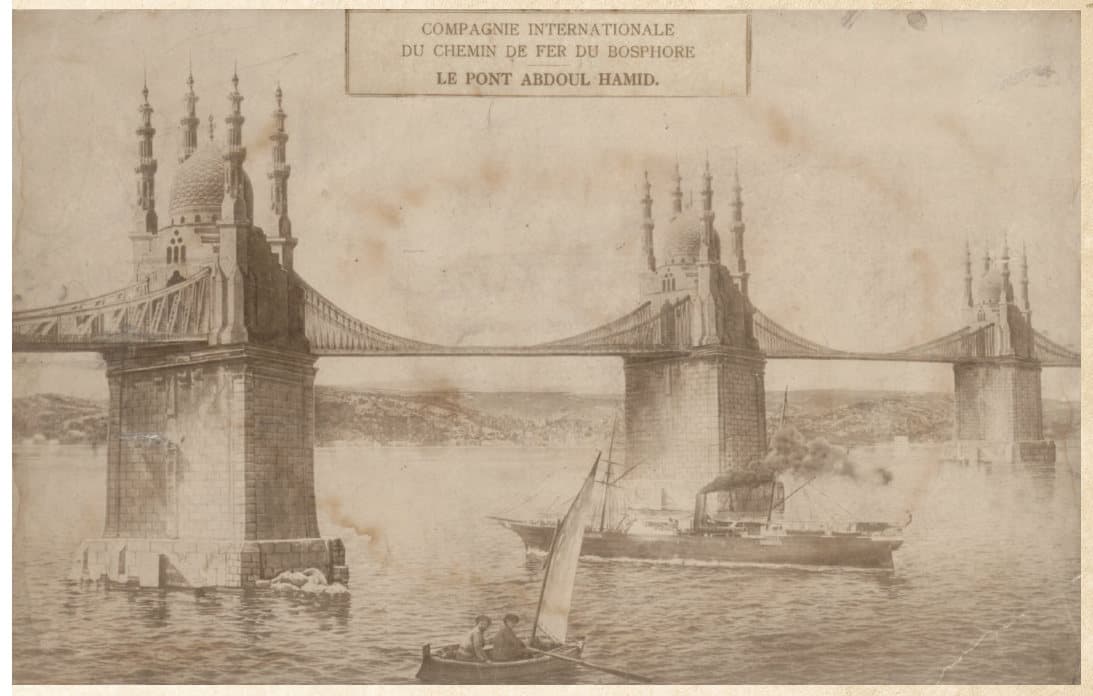
Picture 2 Arnodin's bridge connecting Asia and Europe (BOA, PLK.
p, 3500)
Picture 3 Philipp Holzmann
Company's railway bridge project for the Golden Horn
in 1911, (PLK. p, 3500)
local measurement unit, with 1 meter equaling approximately 1.64 Florentine braccias. Considering the approximate width of the Golden Horn is 244 meters, the expression “400 braccia over the sea” is an accurate description. With the stated length of the bridge being 600 braccia or 365 meters, it implies that it would be the longest bridge ever constructed up to that time.
Considering the year 1502, once it became evident that this drawing was by Leonardo da Vinci, discussions arose periodically about whether the bridge could or should be built. This debate gained attention on various platforms worldwide, and the Norwegian artist Vebjörn Sand emerged as the figure who introduced this bridge to the world. In 2001, Vebjörn Sand had a quarter-scale replica of the bridge constructed as a highway overpass near the town of Aas, close to Oslo.91
After a long hiatus, the idea of connecting both sides of the Bosphorus with a bridge or tunnel only emerged towards the end of the 19th century. In this context, in 1891, a project for an underwater steel tunnel between Sarayburnu and Üsküdar was designed by the French railway engineer Simon Préault. This project, named the “Undersea Steel Tunnel,” aimed to achieve rail
transportation through a tunnel beneath the sea. However, due to the highly challenging construction technology and substantial cost, the project remained at the drawing stage. Subsequently, the International Bosphorus Railway Company proposed encircling İstanbul with a ring road and connecting Asia and Europe with two bridges. The company's proposal was designed by the French engineer and industrialist Ferdinand Joseph Arnodin and presented to Abdulhamid II in March 1900. The company's proposal was designed by the French engineer and industrialist Ferdinand Arnodin and presented to Abdulhamid II in March 1900. The main purpose of the prepared project was to establish a connected railway system between both continents. For this purpose, two bridges across the Bosphorus were suggested, one between Sarayburnu and Üsküdar and the other between Rumelihisarı and Kandilli.
An important aspect here is Arnodin's ability to foresee the future development of İstanbul and prepare noteworthy plans accordingly. Despite this, Arnodin's project was not accepted. In the same year, the Bosphorus Railway Company, after comprehensive preparation,proposed building a bridge between Rumelihisarı and
Anadolu Hisarı. The bridge, which would accommodate trains, cars, and pedestrians, was named “Hamidiye” in line with the prevailing circumstances. Despite plans for this grand bridge, it was not approved by the Sultan. Also during the reign of Abdulhamid II, three American engineers—Frederik E. Strom, Frank T. Lindman, and John A. Hilliker—presented a utopian metro project called “Tünel-i Bahrî,” which aimed to connect Asia and Europe. In the plan they prepared, they proposed the construction of a tunnel between Sarayburnu and Salacak. However, this proposal, too, was deemed impractical and rejected. In the subsequent period, due to internal turmoil and wars, the Ottoman Empire entered a tumultuous phase, and the idea of building a bridge or tunnel across the Bosphorus was shelved.92
In 1911, we encounter a bridge project that would carry a railway over the Golden Horn, not the Bosphorus, in a drawing by the German company Philipp Holzmann, which was then constructing the Baghdad Railway. As known, Holzmann was also building the famous Varda Viaduct between Belemedik and Hacıkırı in the Taurus Mountains along the Baghdad Railway route.
Leonardo da Vinci's windmill, revolving tower, and bridge projects presented to Sultan Bayezid II
A person named Licardo from Genoa (Leonardo da Vinci) conveyed to the Ottoman Sultan (Sultan Bayezid II) a letter stating that he had designs for a mill that operated solely with the wind, featuring various advantages over sea mills, as well as a self-turning platform to lift a ship's water without the use of ropes. Despite the Sultan's desire to build a bridge from İstanbul to Galata, he heard that no one knew how to undertake such a task, leading him to abandon the idea. Licardo, confident in his ability to construct tall structures, proposed that, if desired, he could build a bridge allowing only sailboats to pass beneath, equipped with a lifting capability to traverse to the Anatolian side
whenever necessary.
1502
This is a letter, possibly sent by Licardo from Genoa.
I, your servant, have been thinking a lot about the mill issue, and with the help of Allah, I found a solution: I designed a mill that works only with wind, without water. This mill is simpler than those in the sea, easier for the people, and can be built anywhere. Again, by the grace of Allah, I conceived a method to remove the water from a ship using a self-turning wheel without ropes or pulleys.
I have heard that you wanted to build a bridge from İstanbul to Galata but didn't do it because there was no one knowledgeable about it. Your servant knows how to build a structure so high that nobody would want to pass over it due to its height.
I thought like this: Let me build a skeletal structure (frame), then remove the water and insert piles. Let me design it so that only a sailing ship can pass from below, and let me build a lifting bridge so that they can cross to the Anatolian side whenever they want.
However, since the waters flow continuously and would erode and wear out the edges, I will design it to prevent this, ensuring that the flowing water does not harm the sides. [This way], the sultans
who come after you can build it more economically and easily.
I hope you consider these words true and continue to acknowledge your servant, always at your service.
This letter was written in the month of July (Julius).
TS.MA.E, 754/99
Source: Innovation, Inventions and Quests Among the Turks