
Transport & engineering
1870
The ancestor of today’s ferries Ferryboats designed by Hüseyin Haki Bey, director of Şirket-i
Hayriye
In ancient times, there is historical evidence indicating the construction of cargo ships with slatted ramps at the bow and stern, and these ships were used until the steam era. In 490 BC, during the invasion campaigns of Greece, it is known that the Persian navy transported horses from the sea to the coasts of Greece using specially made ships. The Abbasids exported various goods, including a significant number of horses, from the Persian Gulf to India. It is known that ships suitable for horses were constructed along this route. Similar to modern military landing ships, the rear parts of the ships used by the Arabs were also open. These ships, equipped with ramps and slats to prevent the horses from slipping, were used for trade, including the transportation of elephants and camels.
These special vehicles, referred to as horse/ox ships or boats by the Ottomans, were used
during the conquest of Kaffa (1454) in the reign of Mehmed the Conqueror. Additionally, it is known that there were 30 horse ships in the navy prepared for the conquests of Modon, Coron, and Negroponte during the reign of Bayezid II. They acquired this name because horses, in addition to humans, were transported with these ships. Novice boys were assigned to row these horse ships. Horse ships were used in İstanbul for centuries. It is known that horses were transported along with commercial goods between Üsküdar and Eminönü. This route also held a separate significance for expeditions to the east. From the historical peninsula to Üsküdar, and vice versa on return, horses, provisions, and ammunition were transported with horse ships. Additionally, these ships were used for transporting timber and firewood.
Outside of İstanbul, horse ships were extensively utilized for military, civilian, and
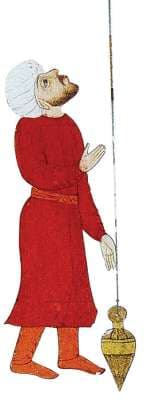
Figure 1 Hüseyin Haki Bey, Director of Şirket-i
Hayriye
commercial purposes in many places. For example, between Gallipoli and Lapseki, horse ships were heavily used on the rivers Danube, Nile, and Euphrates. It is known that pilgrims departing from İstanbul and its surroundings to Mecca via the sea bypassed the Gulf of İzmit and traveled from Gebze to Hersek with horse ships while crossing the Sea of Marmara during their journeys.
Ships used for passenger transportation were adapted as needed to accommodate passengers along with their riding and pack animals. Particularly in İstanbul, those wishing to transport riding and pack animals between the two shores used water vehicles similar to today’s car ferries, with animals on the lower deck and passengers on the upper deck.255
The first steamship in the Bosphorus was the Swift, purchased from England in 1828. The administration named it Sürat, but since the ship emitted steam from its funnel while moving, the public referred to it as the buǧu vapuru (steamship). In 1843, another steamship named Hümapervaz followed. The trips, which used to take quite a long time with rowing boats, became both shorter and more comfortable and safe with these steamships.256
In the mid-19th century, the idea of establishing a transportation company was sparked in İstanbul in order to make it easier for the residents of the Bosphorus to travel to and from the city. On November 15, 1850, the company called Şirket-i Hayriye, was granted the privilege and monopoly to operate ferries between İstanbul and the piers to be built on the Anatolian and Rumeli shores of the Bosphorus for a period of twenty-five years. In fact, before this initiative, one of the ferries of Tersâne-i Âmire had been allocated for the civil servants
Figure 2 The ferry named
Stark Street, which was used in 1880’s, (Oregon
Historical Society)
living along the Bosphorus; however, these morning and evening voyages were far from meeting the need. Four side-wheel steamships imported from England started operating in the Bosphorus in the spring of 1852. The management, which lasted from the middle of August 1866 until 1895, corresponds to one of the company’s most prosperous periods during the time of Hüseyin Hâki Efendi. Despite a
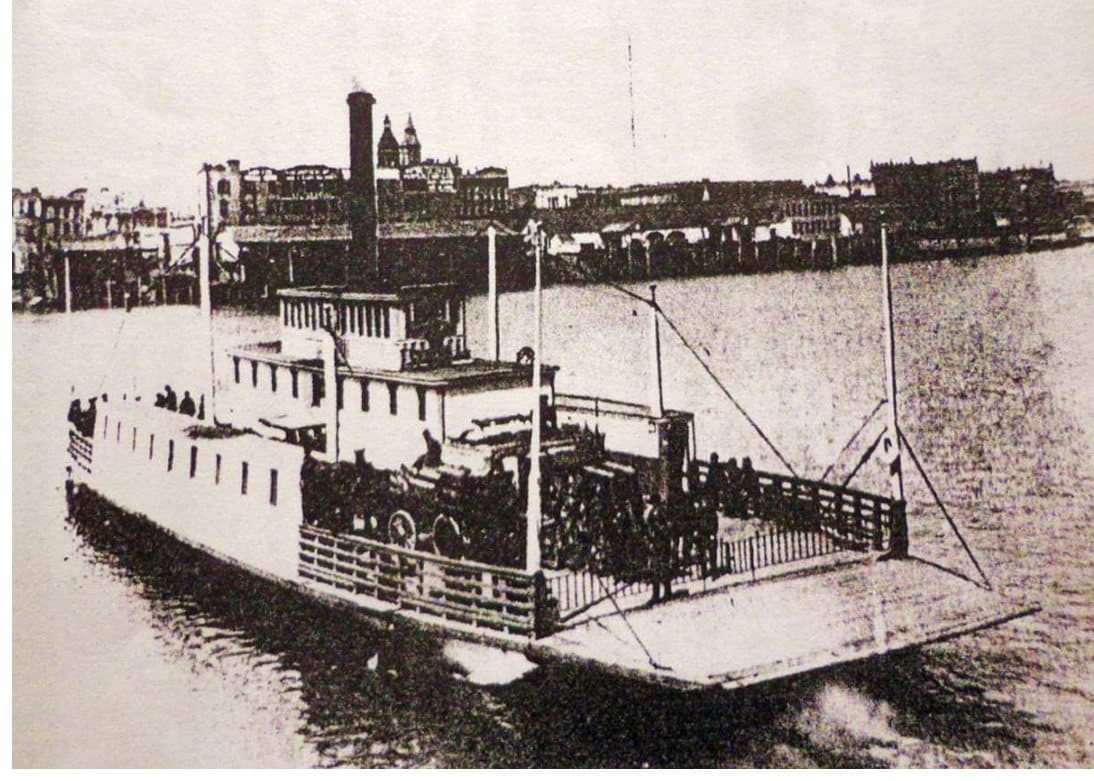
temporary dismissal in 1875, he was reinstated due to the deteriorating situation, marking a significant era for the company. During this period, the number of ferries was increased from sixteen to forty-six, and the first ferryboat, named Suhulet, for which Hüseyin Hâki Efendi commissioned drawings from English engineers, went into service in 1870. The first load of the Suhulet, which made its first voyage
Figure 3 Suhulet at Sirkeci
Port between Kabataş and Üsküdar, was cannon carts.257
During the general assembly where the budget of Şirket-i Hayriye for the year 1868 was discussed, it was decided to purchase a ferry ship from England for 9,000 lira. The decision was based on the belief that operating a ferry ship between Üsküdar and İstanbul would provide convenience in the transportation of carts and animals, resulting in surplus income. On October 5, 1869, the proposal was approved by the Sultan's will. The name of the ship to be purchased had already been determined at the conceptual stage, taking into consideration the benefits it would provide.258 In a petition dated August 15, 1870, the boatmen in İstanbul mentioned that the introduction of the ferryboat by Şirket-i Hayriye had affected their earnings, and they were now struggling to make a living. They requested a solution to this issue.259 In the accounting expense records of Şirket-i Hayriye for the year 1286 (1870), we see that the Suhulet
ferry, numbered 26, underwent a caulking and painting process lasting for 18 days from July 13 to July 31, 1286 (July 25 to August 12, 1870).260
These records indicate that the Suhulet ferry was delivered shortly after the order, within a brief period—approximately six months.
Primitive ferryboats have been used in many parts of the world for a long time. However, the introduction of steam engines led to significant advancements and changes in these vessels, known as ferries, particularly in the Western world. The first steam-powered ferry in the United States was operated by John Fitch on the Delaware River in the year 1790. The advent of steam power greatly improved ferries; they became larger, faster, and more reliable, featuring a design distinct from other types of vessels.261
Şirket-i Hayriye executives, including Hüseyin Hâki Efendi, İskender Efendi, who had experience as an inspector, and Mehmed Efendi from the Hasköy Factory, came together to design a boat type that had not been seen before. This boat had two doors at both ends. The ferry, whichever way it turned its wheels, would move in both directions at the same speed. Since it had no front or back, the direction it was moving in would be considered the front. The deck was empty; horses and carriages would be taken here, and passengers would go up to the upper deck. Up to that time, ferry technology in the West had advanced significantly, leading to the construction of quite large and powerful ferries. However, the ferries made in the West were not practical. Ferries used to move unidirectionally towards the front, and when it was necessary to approach the pier and unload their cargo, they had to maneuver to turn their backs. Hüseyin Haki Efendi’s design
Figure 4. Suhulet, with
funnel number 26, continued in service during
the Republican era.
formed the basis of modern car ferries—open at the front and back, able to load and unload cargo and passengers from both sides. This innovative ferry, ordered from the Maudslay, Sons & Field workshops in London and featuring side wheels, was aptly named Suhulet, meaning convenience.262
Suhulet, brought from London to İstanbul with considerable difficulty, and its counterpart Sahilbent, ordered and brought to İstanbul shortly thereafter, served for years by transporting passengers, horses, carriages, and military supplies between the two sides of the Bosphorus. In 1911, during the Italo-Turkish War, a torpedo tube was installed on Suhulet. For months, it was utilized in transporting cavalry and artillery regiments from the Anatolian coast to Rumelia during the conflict in Çanakkale. A battalion of artillery, consisting of four batteries, could have taken four days to cross to the opposite shore, but thanks to the Suhulet, this difficult task was completed in just four hours. When the Balkan War erupted, Suhulet was among the many vessels allocated for military transport. Throughout World War I, as there were no dedicated vessels for the army’s
transportation needs, Suhulet and Sahilbent were instrumental in carrying the army‘s animals, such as horses, cattle, and donkeys, as well as automobiles and various types of equipment and supplies between the two shores. At one point, Suhulet transported troops to Çanakkale. After running aground near Büyükçekmece on September 22, 1914, due to dense fog, it was pulled to Hasköy for repairs and then returned to the service of the army. Suhulet, which worked continuously for 58 years, underwent a substantial overhaul in 1930 at the Hasköy factory. During this process, its boiler and engines were removed, and a diesel engine was installed in their place. In 1945, when the Şirket-i Hayriye was acquired by the Ministry of Transport, the Suhulet was transferred to the General Directorate of State Maritime and underwent a major overhaul in 1952. The engine was once again replaced with a new one. Suhulet was retired in 1958, and, by 1961, when it was sold for dismantling, it was an 89-year-old vessel.263
Source: Innovation, Inventions and Quests Among the Turks