Health
1886
Commendation of Pasteur Abdülhamid II was the first statesman in the world to award Louis Pasteur, the inventor of the rabies vaccine, with a medal and to send
cash aid
Louis Pasteur’s introduction of the rabies vaccine to the scientific world on October 26, 1885, had also attracted great attention in İstanbul. At the meeting of the Society of Medicine on March 19, 1886, it was decided to make Pasteur an honorary member of the society. Furthermore, the idea of providing financial support to the Pasteur Institute to be established in Paris and sending a delegation there was brought up.
On February 5, 1886, Essad Pasha (Toptani), the ambassador to Paris, was asked to investigate and report on the countries that had awarded honors and medals in recognition of the services of Pasteur, the Parisian chemist who discovered a drug that prevented the spread of rabies. Essad Pasha, in his response, mentioned that the methods and treatment tools used by Pasteur for the cure of rabies were still experimental, and no effective and conclusive results had been achieved. He also noted that the methods employed had
faced objections from many doctors. As of now, neither any state had bestowed an award nor provided any encouragement or commendation for Pasteur's humanitarian initiative.274
Abdülhamid II had decided to provide necessary support to this scientist and his established health institution, intending to benefit the Ottoman people from his healthcare services. Abdülhamid II sent Pasteur a Order of the Medjidie First Class and ten thousand francs for the institute on rabies. A delegation consisting of Dr. Alexander Zoeros Pasha, Lieutenant Col. Dr. Hüseyin Remzi Bey, and Veterinarian Lieutenant Col. Hüseyin Hüsnü Bey was sent to Paris on June 8, 1886.
Upon reaching Paris, Zoeros Pasha sent a detailed letter dated July 6, 1886, recounting his experiences. The delegation had arrived in Paris on June 20, 1886, and the following day, they visited the embassy to meet with Ambassador Essad Pasha. Initially, it was deemed appropriate
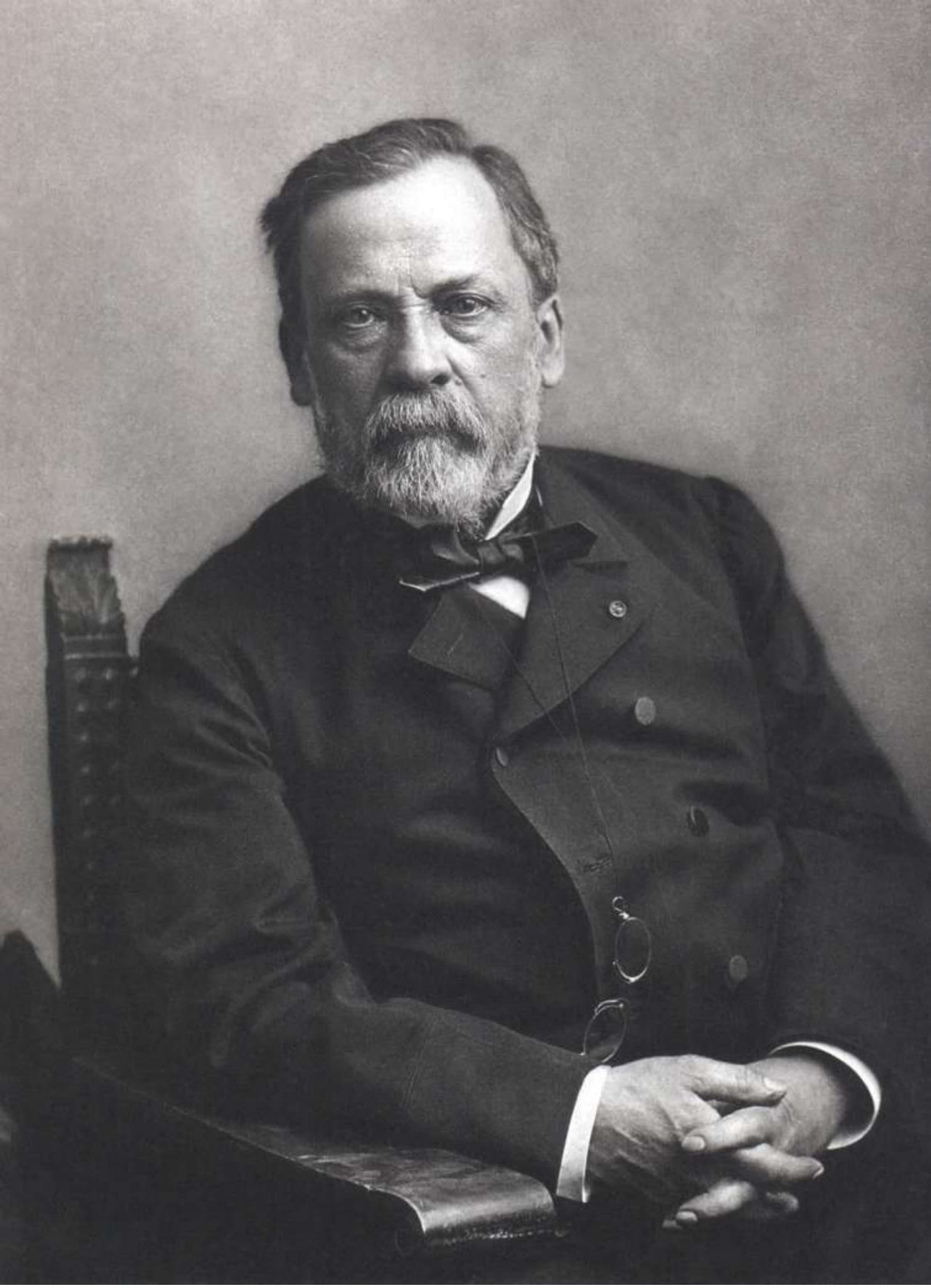
Figure 1 Pasteur, the inventor of the
rabies vaccine
to send a letter to the French Ministry of Foreign Affairs to arrange a meeting with Pasteur. However, as ten days passed without a response, the delegation decided to personally visit Pasteur without waiting for an official reply. Despite being in formal attire, they visited Pasteur's laboratory, finding him in the company of his assistants and many doctors from various countries. Pasteur warmly welcomed the visitors.
They presented Pasteur with the medal, certificate, and letter given by the Sultan. In the meantime, they conveyed the message that the Sultan always encourages those who serve humanity for the advancement of science, regardless of homeland and nation. Pasteur expressed his pleasure and gratitude for the Sultan's gifts and said that he would share the vaccination method and other necessary details. However, he added that in order to fully understand the vaccination method, it is necessary to be familiar with some scientific details and to study them in depth.
Zoeros Pasha noted that from October to July 6, the number of people vaccinated had reached 1,450. These individuals were of various genders and nationalities, coming from all parts of European countries and even from United States of America. Vaccination and wound care were provided free of charge, and even those found in need were assisted by Pasteur. Despite the presence of doctors from foreign countries such as England, Belgium, USA, Spain, and Greece, there were no doctors from Germany. This situation was interpreted as a result of Monsieur Pasteur being French.
Upon the request of the foreign doctors, it was deemed appropriate to take a group photo with our delegation as a souvenir of Pasteur's clinic. The foreign doctors showed respect to the Ottoman delegation and accepted Zoeros Pasha as the leader of the delegation.
Figure 2 The Ottoman
Delegation Under the Presidency of Zoeros Pasha
at the Pasteur Laboratory.
(In the upper front row,
from left to right: Veterinarian Hüseyin Hüsnü Bey, Professor Zoeros Pasha, and Dr.
Hüseyin Remzi Bey)
The day after the meeting with Pasteur, the delegation went to meet the President of the Academy of Sciences and the prominent French scientist Edmond Jurien de la Gravière to present the financial aid donated for Pasteur’s charitable organizations. Since he was not available that day, the meeting could only take place two days later. The delegation informed him that they brought the amount of 10,000 Francs, donated by the Sultan for Pasteur's charitable institutions, equivalent to 433 Ottoman Liras.
After expressing the necessary thanks on behalf of the special commission for the Sultan's aid and donations, Mr. Jurien requested that the amount be handed over to the bank named Crédit Foncier de France. Mr. Jurien highly appreciated the Sultan's contributions, stating, “Today, among rulers, only His Majesty the Sultan has made such a donation and private assistance for charitable purposes in the name of humanity.”275
The delegation, which stayed in Paris for nearly six months, returned to İstanbul in December 1886. In January 1887, Dâülkelp Tedavihanesi (Rabies Treatment Center) were opened in İstanbul. Zoeros Pasha was appointed as the head of this institution, which was the third in the world and the first rabies facility in the East. The first vaccination at this institute was administered on June 3, 1887.276
The delegation that met with Pasteur in Paris for the rabies vaccine also presented the sultan’s medal and donation
The delegation sent to Paris by the Sultan to see and learn about the rabies vaccine discovered by Monsieur Pasteur arrived in Paris on June 20, 1886. Pasteur was presented with the Sultan‘s medal and certificate; he expressed his gratitude for the Sultan‘s gifts. 433 Ottoman liras worth
10,000 francs, delivered by the Sultan to the relevant place. Monsieur Jurien, who received the money, said, “Today, among rulers, only His Majesty the Sultan has made such a donation and private assistance for charitable purposes in the name of humanity,” and highly appreciated this aid of our Sultan.
July 6, 1886
To the Chief Physician of His Majesty
the Sultan, Honorable Sir
Monsieur Pasteur’s discovery of the rabies vaccine and the delegation sent by the Sultan to Paris to observe and learn how the vaccine is administered arrived in Paris on June 20, 1886. The next day, we went to the embassy and met with the Paris Ambassador Essad Pasha, informing him about our mission. To facilitate the successful completion of our mission in Paris, I presented the order from the Ministry of Foreign Affairs. It was initially decided to write a letter to Monsieur Pasteur, inquiring about our mission and determining a suitable day for an audience. However, later on, Ambassador Essad Pasha changed his mind and decided it was more appropriate to write to the French Ministry of Foreign Affairs instead of directly to Monsieur Pasteur. After waiting for ten days without receiving any response or news, and given my acquaintance with Monsieur Pasteur, I decided to forego waiting and promptly went to Monsieur
Pasteur to personally deliver the bestowed medal. Being dressed in our official attire along with the other members of our delegation, we went to Monsieur Pasteur’s operating room. We found Pasteur in his private space, surrounded by his assistants and doctors from other countries. Monsieur Pasteur warmly welcomed us and remembered our meeting and discussions in Copenhagen. He mentioned that he had heard about our arrival but had not received any official information until that moment. The official information only reached Pasteur six days after our meeting.
Therefore, if we had waited for orders from the embassy and the Foreign Ministry, it would have turned out that we would not have been able to meet the professor until a month after our arrival in Paris. Our decision to act as described above was very fortunate.
I presented Monsieur Pasteur with the medal and certificate given by the Sultan, together with the letters. I informed him that the Sultan encourages anyone who works in the field of science and serves humanity, regardless of their homeland and nationality, and makes them pleased. I expressed, “On this occasion, our Sultan has demonstrated this with his gifts to Monsieur Pasteur, a member of the French nation, whose language we have accepted as our official language.” Monsieur Pasteur expressed his great satisfaction and gratitude for the gifts from the Sultan. He promised to demonstrate his vaccination method and provide other necessary details. However, he added that in order to understand the vaccination method properly, it is necessary to be familiar with some scientific details and to study them in depth. Then he gave orders to one of his assistants and directed us to the place to show us the working environment.
An hour later, when the vaccination process began, we were sent there. From that day
onwards, every day until one o’clock, Hüseyin Remzi Bey and I continued to observe the vaccination procedure under the supervision of Monsieur Pasteur, alongside his assistants near the operating room. The vaccinations were administered by Dr. Jacques-Joseph Grancher, a professor from the University of Paris.
Monsieur Pasteur’s vaccination procedure attracted daily crowds ranging from fifty to eighty people, including individuals who had come from the surroundings and foreign countries. These individuals were divided into ten groups, and each person needed to be vaccinated over a period of ten consecutive days. The potency of the vaccine increased gradually each day.
Since October, the number of vaccinated individuals has reached 1,450. These individuals come from various genders and nationalities, including people from all parts of European countries and even from USA. The vaccination and wound care are provided free of charge. Additionally, Monsieur Pasteur offers necessary assistance to those in need. The doctors who have come from foreign countries include English, Belgian, American, Spanish, and Greek doctors, but there is no doctor from Germany here. This fact is attributed to nothing else but Monsieur Pasteur being French.
The foreign doctors from different countries requested to take a collective photograph as a memento of Monsieur Pasteur’s clinic and kindly asked our delegation to participate. Naturally, I conveyed that it was appropriate, and as can be seen in the picture I presented, they showed great respect to the Ottoman delegation, accepting me as the leader of the delegation.
The day after our meeting with Monsieur Pasteur, we went to the head of the special commission to present the financial aid donated for Pasteur’s charitable organizations. This individual is currently the president of the Academy of Sciences
and a prominent figure among French scientists, Edmond Jurien de la Gravière. Since I couldn’t find him on the day of my visit, I was only able to meet him two days later. During our meeting, I informed him that I brought the amount of 10,000 Francs, donated by the Sultan for Pasteur’s charitable institutions, equivalent to 433 Ottoman Liras.
On the day of my departure from İstanbul, as I had previously requested, the amount of 10,000 Francs, which was the Sultan’s order, was given to me by the Ministry of Finance in the form of 433 Ottoman liras and a quarter. However, this amount did not truly equate to 10,000 Francs. It is not a secret that I had made significant efforts at the Ministry of Finance to convert this sum into Francs. Despite my efforts, I was forced to take the money without converting it to Francs. However, I came up with a solution. I said, “The money I brought is in Ottoman coins, and this is solely to demonstrate Ottoman contributions to this matter.” This statement pleased our French friends greatly. Even though 433 Ottoman liras were 200 Francs less than 10,000 Francs, they appreciated having it in liras. Later, I informed Monsieur Jurien that I had deposited this money in the branch of the Ottoman Bank and that it was ready to be handed over to them.
After expressing the necessary thanks on behalf of the special commission for the Sultan’s aid and donations, Monsieur Jurien requested I deliver this money to the bank called Crédit Foncier de France. He added that donations given for Monsieur Pasteur’s charitable organizations were being delivered there. The very next day, I delivered the money and obtained a receipt. Monsieur Jurien added, “Today, among rulers, only His Majesty the Sultan has made such a donation and private assistance for charitable purposes in the name of humanity,” expressing high admiration for our Sultan’s contributions. Just as I conveyed to Monsieur Pasteur, I detailed
to Monsieur Jurien that our Sultan is a thoughtful and discerning individual, explaining his aspirations and affections for progress. Additionally, every person I spoke to among the scientists acknowledged that our Sultan’s donations surpassed those of everyone else and expressed their appreciation for his generosity.
In reply, I emphasized the inherent virtues of our beloved Sultan, whom we all love dearly, and I longly explained how his efforts since his accession to the throne have really set our country on the path of progress. I might also add that the Sultan’s medals and grants to Monsieur Pasteur have had a positive effect here and have earned us a warm welcome and affection everywhere.
Here, all the famous scientists I had previously acquainted with received me with exceptional
respect. They advised me on finding solutions to important scientific issues, and the renowned scholars of our time generally showed their willingness to assist me. Among them, Monsieur Boruvardel (?), Monsieur Prust (?), Monsieur Grancher, and two assistants of Monsieur Pasteur were particularly notable for their generosity.
In our extensive private discussions with Monsieur Pasteur, he emphasized the need for indepth research on this subject. At that time, when I expressed my desire to learn about bacteriology and the development of microbes, he confirmed the importance of this and promised to help in any way necessary. Every scientist I spoke to found my inclination and purpose admirable.
I will therefore endeavor to obtain information in this field, which will undoubtedly take me at least
two or three months to obtain this important information. As I have already mentioned, I have sought advice from well-known professors who are in charge of laboratories where such information can be obtained.
Additionally, I will consider the topic of a special professor in the field of bacteriology and microscopy related to epidemics and contagious diseases. While dealing with this, I will also continue to visit Monsieur Pasteur’s laboratory and engage in the ongoing experiments.
I encouraged and facilitated my friend Mr. Hüseyin Remzi to learn about microbiology, microscopy, and other important scientific subjects, especially those related to animal science, as he was a teacher at the school and had a great interest in these subjects. I am currently
looking for a suitable professor for him.
As for my friend Veterinarian Hüsnü Bey, it is clear from Monsieur Pasteur’s statement that there is no connection or relation of veterinary science in his laboratory. Both Hüseyin Remzi Bey and I witnessed this fact with our own eyes. Due to this reason, Hüsnü Bey naturally cannot accompany us when we visit the surgical hospital and Pasteur. However, considering that veterinarian Hüsnü Bey is in Paris, I thought it would be beneficial for him to acquire knowledge about some important veterinary issues, such as the anthrax disease discovered by Monsieur Pasteur and other contagious animal diseases.
Indeed, it is known that France earns more than million francs annually from Monsieur
Pasteur’s method for preventing anthrax in animals. Therefore, the importance of obtaining this information for our country is evident.
Twelve days ago, a request was made to the embassy from the Ministry of Foreign Affairs to obtain permission to enter the Alfort School (École nationale vétérinaire d’Alfort). However, as I have not yet obtained permission in this regard, I wrote a personal recommendation letter to the director of the Alfort Veterinary School and to Monsieur Nökar (?), one of the renowned veterinarians and professors at the school. Now, to obtain the information that is very important and beneficial for our country, I will take Veterinarian Hüsnü Bey there next Tuesday.
Monsieur Pasteur gave me two letters, one to the
Sultan and one to you. When I told him that I would send them together and also send his photograph to İstanbul, he courageously agreed to present it to the Sultan by giving me a large photograph and asking me to present it. However, because of its size, it is not possible to send the photograph by post, as it would inevitably be damaged. Therefore, I will either look for an alternative way of sending it or, if not possible, I will keep it and bring it undamaged when I return.
Here is a summary of what we have accomplished so far. However, in a few days, the annual school holidays will begin, and naturally, this will interrupt some of our work. As you are aware, our arrival here coincided with the beginning of the school holidays, and this is not our fault. Now, we will have to wait for the resumption of classes because the holidays will hinder the resolution of
the important issues we are dealing with. Obtaining the significant information I mentioned earlier in such a short time frame is challenging.
However, during this intervening period, efforts will be made to obtain information on other important and beneficial issues for our country. For example, I have started examining various important issues related to public health and infectious diseases, and upon my return, I will present different reports on these matters. If the means and my financial situation are suitable, and if you grant permission, I will eventually go to the city of Munich and examine the state of the public health school under the supervision of Pentan Gofer (?). Perhaps I will also go to Berlin to investigate the public health laboratory built a year or two ago under the initiative of Mr. Bismark and under the supervision of Dr. Koh. While these
tasks may be completed in just a few days, their execution is certainly subject to your approval.
As I conclude my sentences with my blessings to our Sultan, I await your orders on this matter.
From Paris.
July 6, 1886 Zoeros
Y.PRK.SGE, 2/73
Source: Innovation, Inventions and Quests Among the Turks