
Science & discovery
1888
Electricity Illumination that came a little late to the Ottomans
Edison's invention of the incandescent light bulb in 1879 and the subsequent establishment of the first electricity generation center with a distribution network in New York in 1881 marked the beginning of widespread use of electrical energy in homes and industries. The late 19th century witnessed significant advancements in electricity generation in many parts of the world. During this period, electricity power plants were established in numerous locations, leading to the widespread utilization of electrical energy. As the early 20th century approached, technological advancements in electricity production and distribution resulted in the consecutive commissioning of many large-scale power plants in Europe and North America.
The Ottoman Empire's first power plant was a small hydroelectric plant established in Tarsus, Adana, in 1902. Located approximately 1800 meters away from Tarsus, the plant was created by harnessing the rotational motion of a water mill‘s
transmission belt on the Berdan River. Later, it was converted into a hydroelectric power plant. Initially, only the streets and a few residences of high-ranking officials could be illuminated with electricity.277
After the initial production in Tarsus in 1902, electricity generation began in cities such as Damascus in 1904 and Beirut in 1906. Following the Second Constitutional Era, cities like İstanbul, İzmir, Baghdad, Bursa, and Konya were illuminated by companies established with granted privileges.278
In 1888, an electricity factory was established in İstanbul, followed by the first use of electricity in buildings in February 1889. As a result, some institutions, particularly the Ottoman Bank, electrified their buildings with their resources.
Gradually, electrical appliances began to find a broader range of applications. In 1905, electricity was being used in some hotels and shops in Beyoǧlu. In 1906, festivities were organized on the
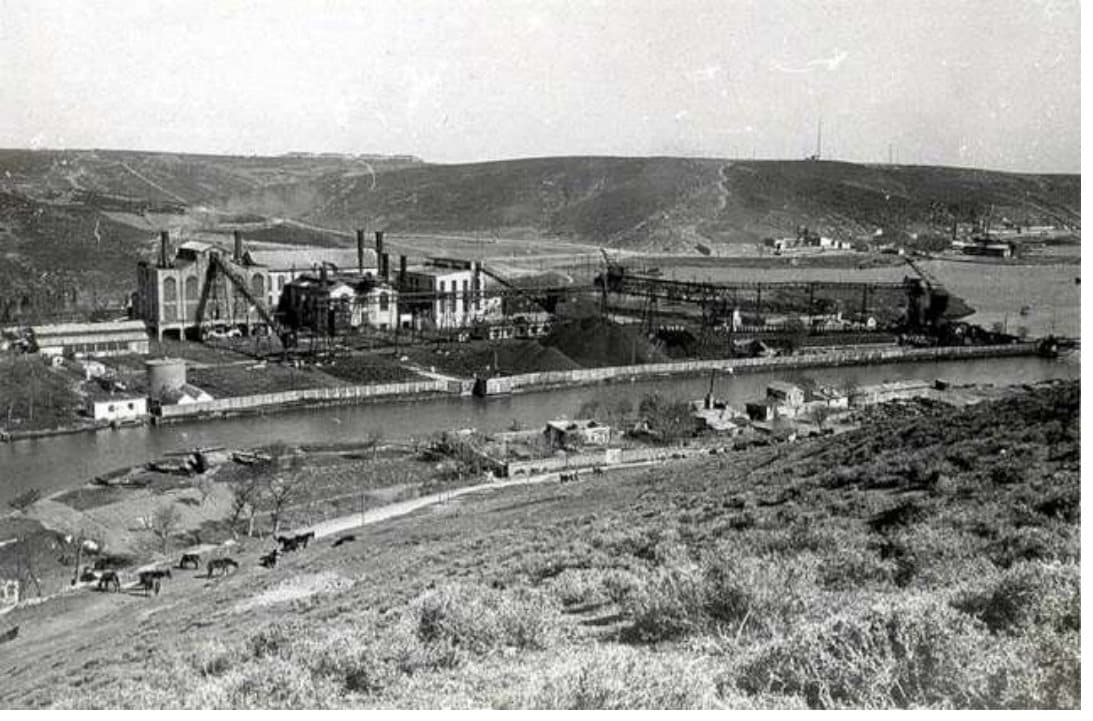
Figure 1 Silahtarağa Power
Plant occasion of the sultan's birthday on the Ertuǧrul ship using electric lighting.
In 1907, electric lighting became more accessible for institutions with the means. Electric lighting was freely used in theater buildings next to the Büyük Kulüp in Beyoǧlu. In October of the same year, two British entrepreneurs obtained permission to bring two electric machines, one with four and the other with eight horsepower, to conduct cinema screenings.
During this period, in December 1907, Sultan Abdülhamid II granted the concession of lighting
the city of İstanbul with electricity to a state institution called Tophâne-i Âmire. Since it was not possible for Tophâne-i Âmire to undertake this task on its own, European electricity companies were contacted to see under what conditions they could help with this task. However, political developments in a short period of time would lead to the postponement of such investments for a while.
Following the declaration of the Second Constitutional Era, developments related to bringing electricity to İstanbul proceeded in line with the inclinations of the ruling Committee of
Union and Progress (İttihat ve Terakki) Party. During this period of intensified efforts to electrify İstanbul, it was observed that some homeowners, especially in the Beyoǧlu district, were using electricity in their residences using their own means. According to the government, electricity production and distribution in the city were considered a public undertaking. Therefore, until the date when electricity would be produced and distributed by the state, the use of electricity in homes was prohibited. Şehremaneti (Municipal Police) was assigned to oversee this process.
Following these developments, Nâfia Nezâreti (Ministry of Public Works) announced through the press in February 1910 that a tender would be opened for the electrification of İstanbul’s lighting and trams. The companies were requested to submit their proposals in a dossier format to the ministry. After the proposals were discussed at the Ministry of Public Works, it was observed that the most favorable conditions were provided by the Ganz company from Hungary among the eight companies, and the decision was announced. Subsequently, the agreements and specifications, which had been prepared and agreed upon by the parties, were signed on October 24, 1910.
In September 1911, the establishment works of the electric factory commenced. A location in Silahtaraǧa, on the shores of the Golden Horn, was allocated to the company for this purpose. Factors such as easy transportation of the raw material coal by sea and land, the availability of water from a nearby stream for various stages of electricity generation, and the fact that Silahtaraǧa was located in an area that was neither completely inside nor outside the city played a role in the choice. The factory would convert coal into electrical energy through combustion. The generated electricity would be used for trams, supplied to industrial facilities, and distributed throughout the city via underground and overhead
lines.
The factory became fully operational on February 11, 1914, and electricity was supplied to the trams. On February 14, 1914, electricity was first provided to the city. By the end of 1914, the network length had reached 258,320 meters, and the number of transformer substations was 60. Despite all the challenges, the number of electricity subscribers, which was 2,055 in 1914, had increased to 12,894 by 1918. In 1920, it reached 17,207.279
Lighting the palace with electricity
Upon the decree for the installation of the electrical equipment ordered for the Ottoman Palace from Europe until the arrival of Prince Dodimburg (referring to Duke of Edinburgh), telegrams were sent to the relevant factory and officials urgently requesting the quickest placement of lamps, the fundamental tools for illumination with electricity. The telegrams specifically stated that these lamps should be accepted by the French Post Ministry in bags and promptly sent via fast train through the newly opened railway. Additionally, in case of non-
arrival, it was communicated that alternative solutions would be discussed with the Director of Manufacturing at the Telegraph and Post Ministry Factory. Correspondences related to the responses to these requests were conveyed to the Grand Vizier through telegraphs sent by the Minister of Telegraph and Post, Âlî Efendi.
August 24, 1888
Your Highness
In your letter dated 14 Zilhicce 1305 (August 10, 1304), it was conveyed that His Majesty the Sultan ordered, “The previously ordered electrical equipment for the Palace from Europe to be delivered and installed before the arrival of Prince Dodimburg. If, for any reason, they cannot be delivered in time, information on whether alternative methods of illumination with electricity could be implemented should be provided.”
Upon this, initiatives were immediately taken, and a telegraph was sent to the factory and the contractors to send the materials as soon as possible. In addition, a telegraph was sent to the French Telegraph Ministry, requesting that the lamps, which are the basic means of electric lighting, be delivered quickly by high-speed train and the newly opened railway and delivered to the Paris Post Office by the factory in mail sacks.
Furthermore, in the event that these lamps do not arrive within the specified timeframe despite these measures, discussions have been held with the Director of Manufacturing at the Telegraph and Post Ministry Factory to explore alternative solutions with the assistance of His Majesty the Sultan.
When the expected response from the ministry in question arrives today or tomorrow, the situation will be presented immediately. Your orders and
decisions on this matter will be awaited after you are informed of the details.
15 Zilhicce 1305 - August 11, 1304
Âlî , Minister of Telegraph and Post
Your Highness
In the response letter from the French Post Minister regarding the lamps, it is stated that sending them in the requested manner is not possible. However, following this telegram, the response from the factory indicates that the lamps have been sent via fast train. If this response is accurate, the arrival of the lamps is expected within the next two to three days.
However, the reasons for the contradiction
between these two pieces of information have been inquired about through telegraphs with a reply and an important note. The telegraphs on this matter are attached herewith. The response regarding this issue will be promptly presented. Your orders and decrees are awaited.
16 Zilhicce 1305 - August 12, 1304
Âlî , Minister of Telegraph and Post
Y.PRK.PT, 3/110
Dangers of electricity
A document prepared and presented to the Sultan by Mehmed Râif, relying on the famous articles of Edison, argues that the dangers arising from electric machines in America and Europe, operating on the alternative method used to illuminate large cities, are caused by high-pressure machines. It emphasizes that there is no significant danger of causing human casualties in
the low-pressure machines operating on the continuous current system used in the Ottoman Palace.
July 24, 1892
An illustrated newspaper about the recent electrical danger that had happened in America was given to your humble servant by your servant Arif Bey.
As known to our benevolent master, the dangers associated with electricity, which has become almost as widespread as gas throughout Europe and America, are closely monitored by your servant in weekly newspapers related to electricity. To date, however, the dangers caused by electricity come from “alternative” machines with dangerous pressures of eight to ten thousand degrees, which are used in Europe to light large cities in a cost-effective way. Apart from being of a dangerous kind, the electric machines in the palace of Your Highness do not exceed 110 degrees Celsius in pressure. Even if, hypothetically, negligence in my duty as a servant were to occur, the danger to human beings is very far away. For all these reasons, as I mentioned above, I occasionally bring the events in Europe to the Sultan’s attention, considering it against my servitude and loyalty to do injustice.
Your servant’s present complaint was confirmed last year by the commission formed with your servant Emil Efendi as a science consultant (Emile Henri Lacoine), and physics professors from Mekteb-i Sultânî and Mekteb-i Tıbbiyye-i Şahane (Galatasaray Lycée and the Imperial Military School of Medicine), following a famous article on such dangers published by the American Thomas Edison. This matter was presented to your sublime
office at that time by your servants Osman Bey and Emin Bey.
In the said article published by Edison, after mentioning the dangers of high-pressure machines in the “alternative” method, it was stated at the end of the article that machines of the same type as the machines in His Majesty’s Palace, which operate with low pressure and the “continuous current” method, do not pose any danger. However, this aspect of the subject was not presented for any purpose, and only the paragraphs of the article mentioning the danger were presented to you. The paragraphs of the article titled Electric Rodeo, first published in an American newspaper, have been translated by our esteemed master and submitted to your supreme authority for examination. Orders and decrees in this and every matter are within the authority of our esteemed master.
Your servant
(Seal)
Mehmed Râif
Y.PRK.TKM, 25/38
Source: Innovation, Inventions and Quests Among the Turks