
Science & discovery
1904
Inventions presented to the Ottoman
Empire From the second half of the 19th century
The Industrial Revolution refers to the impact of new inventions on production in the 18th and 19th centuries in Europe and the emergence of industrialization with steampowered machines. This transformation led to an increase in capital accumulation in Europe. The Industrial Revolution initially emerged in England and subsequently spread to Western Europe, North America, and Japan, eventually influencing the entire world.
One of the most significant developments of the Industrial Revolution was the invention of the steam engine. In 1763, James Watt discovered a steam-powered machine in Scotland. The advanced version of this machine marks the true starting point of the age of machines. In 1807, American Robert Fulton applied the steam engine to ships. The first regular transoceanic steamship voyages began in 1840. In 1812, the steam engine was first used in locomotives. In 1844, Samuel
Finley Breese Morse inaugurated the first commercial telegraph service in the United States. In 1876, Alexander Graham Bell invented the telephone.
In the 19th century, there were also advancements in agricultural technology. Germany took a leading role in these developments. Germans pioneered the technique of extracting sugar from beets. Another German chemist invented artificial fertilizer. In 1834, an American engineer invented a reaper. After the 1870s, the manufacturing of canned food rapidly increased.
Between 1830 and 1860, the production of coal in England rapidly increased parallel to the development of more efficient methods of coal mining. The demand for iron and steel could be easily met thanks to these methods. This increased production led to a significant growth in construction projects such as
bridges, canals, and railways between 1800 and 1830. Until the 1850s, the Industrial Revolution was predominantly under the control of England. However, after this period, it spread to all of Europe and the United States.302
The advent of industrialization and mechanization in the West, creating new opportunities, led to the emergence of numerous inventions. This trend also shifted the focus in the Ottoman Empire towards evaluating the projects of those claiming to have discovered something new. A group of inventors, mainly composed of foreigners, especially after the 1850s, sought to secure benefits by presenting what they claimed to be their own inventions to the Sultan or the state.
Not everyone who claimed to have invented a new tool or machine and applied to the Ottoman Empire could immediately acquire the title of an inventor. The applications of individuals claiming to have made an invention were examined by various committees and commissions. Ticaret ve Ziraat Nezâreti along with Islah-ı Sanayi Komisyonu, Nâfia Nâzırlığı, Maârif-i Umûmiye Nezâreti, Tophâne Nâzırlığı, Harbiye Nezâreti, Bahriye Nezâreti, Şehremaneti, Dersaadet Ticaret ve Ziraat ve Sanayi Odası, Meclis-i Meâbir,303 were the main institutions consulted in the conduct of these investigations. After the successful completion of the examinations of inventions, patents and privilege rights were granted to the owners. Inventions that were not found to be useful as a result of the examinations were immediately returned to their owners. The owners of the tools and machines that they claimed to have invented were rewarded in
various ways after examinations conducted by the relevant departments.
The majority of the rewards consisted of medals and decorations with spiritual value. The degree of the decorations given varied depending on the value of the invention. If deserving inventors who were not in the Ottoman territory were entitled to receive an award, these awards could be given to a second person who came to İstanbul as a representative or resided there. Another honorary reward for inventors was the grant of an industrial medal. To cover the expenses incurred by inventors in creating their inventions and to encourage them and others for new inventions, specific amounts of money were also granted to inventors.304
In this section, examples of inventions with their explanations, found in various funds of the Ottoman Archives from the second half of the 19th century onwards, are provided.
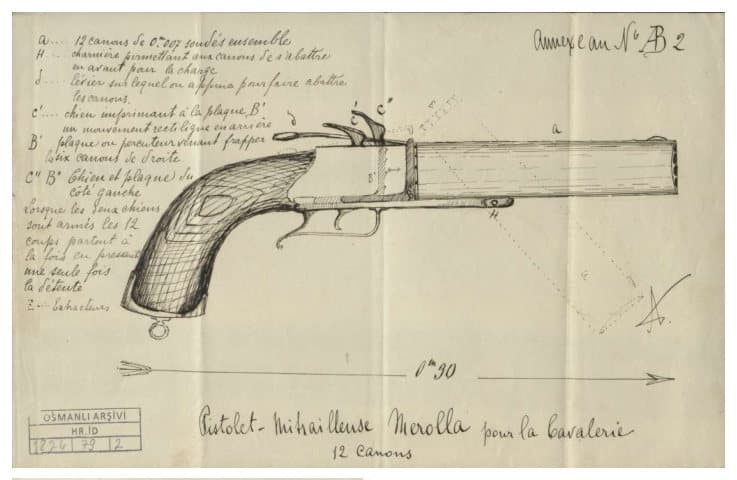
Figure 1 The “Gatling gun” was invented by
the Neapolitan gunsmith Merolla for cavalrymen. March 6, 1887. HR.İD, 1824/79
Figure 2 The Postneshin (spiritual director) of the Chios Mawlawi House, Ismail
Efendi, has invented a
new system regarding the operation of wheel piles used on rivers and streams to elevate water
levels. November 29, 1892. BEO, 115/8578
Figure 3 The invention named réservoir de chasses
(follow-up chamber
with piston and cover) by the French
engineer Polidor Datas, who resides at
Galata, Perşembe Pazarı. February 18,
1895. T.SNİ, 1731/125.8
Figure 4 The drawing of
the “defense torpedo”
was claimed to be invented by Müderris Mehmed Şakir Efendi but deemed useless by
the Industrial Administration. December 1, 1896. Y.PRK.BŞK, 48/94
Figure 5 The drawing of
Nikola, the owner of a horseshoe factory near
Nuruosmaniye, who developed a new system
in the production of
local sling irons. January 20, 1899.
T.SNİ, 1734/81
Figure 6 The drawing of the water purification machine invented by Russell Duncan
Limited from London. August 8, 1899. A.DVN.MKL, 40/35
Figure 7 The drawing
depicts the improvements made
by the American mechanical engineer Josiah Willard Gibb on
the system of “the conversion of potential
energy into kinetic energy: converting
energy obtained without combustion into power.” January
3, 1899. T.SNİ, 1734/456
Figure 8 The drawing of the invention by the
German Emil Richard
regarding improvements in the
arrangement that connects the carriages
to each other. March
27, 1899. T.SNİ, 1736/34.
Figure 9 The drawing of
the invention called the
nezafet basin, a scent-
preventing device specific to traditional
Turkish toilets, invented by Toma
Kehayopolos, a mechanical draftsman
and graduate of the
Industrial School. March 29, 1899. T.SNİ,
1735/30.
Figure 10 The drawing
of the iron and steel
casting system was jointly invented by the
British engineer and chemist John Harvard
Biles and Williham Askrofet. May 4, 1899.
T.SNİ, 1735/50.
Figure 11 The drawing
of the machine invented by the German Adolf Hein, which operates based on water-compressed
air. May 4, 1899.
T.SNİ, 1735/52.
Figure 12 The drawing
of the “new system boiler” invented by the
Ottoman subject Architect André Ritzos
residing in the Saatçi Han in Galata. June 22,
1899. T.SNİ, 1735/88
Figure 13
Figure 13 The drawing of the invention called
the “machined car,” developed by Beyzade Ahmet Muammer and
Nur al-Din in Damascus, which can move solely with human
power, without relying on electricity, steam, or animal power. June 23,
1899. T.SNİ, 1736/148.
Figure 14
Figure 14 The drawing of the
new system invented by the
German Georges Michel Schreiber to prevent railway
accidents. July 21, 1899.
T.SNİ, 1736/30
Figure 15 The drawing
of the bread-making machine was designed by O. Avedik, a subject
of the Belgian state, based on the “helical
conveyor (opposite spiral)” system. July
22, 1899. T.SNİ, 1736/38.
Figure 16 The drawing
of the “wind turbine”
invention by Sirozlu Hristo, a subject of the
Ottoman Empire near
Nuruosmaniye. September 3, 1899.
T.SNİ, 1735/16.
Figure 17 The drawing of the water
system invented by Monrolirus, a subject
of the British state,
for warming and cooling different parts of the human body. September 16, 1899. T.SNİ, 1737/13
Figure 18 The drawing of the machine invented by
Con E. Sebirli, a
subject of the American state, which is used for making cotton bales.
September 16, 1899.
T.SNİ, 1737/14.
Figure 19 Photograph
of the machine invented by Goulidis, a
member of the Rum community in Gemlik,
which is used for chopping mulberry leaves. October 30, 1899. T.SNİ, 1737/24.
Figure 20 The drawing of the hand
lamp invented by
Hazine-i Hassa sermühendisi (colonel
engineer of the Imperial Treasury)
Miralay Ahmet, named the sıhhat lantern, which has the
feature of eliminating
harmful gases from the night lamps used
in bedrooms. December 12, 1899.
T.SNİ, 1737/32.
Figure 21 The drawing of the machine invented by
the English mechanical engineer Henri Marles for use
in carving works.
March 20, 1900. T.SNİ, 1738/125.
Figure 22 The drawing of the method invented
by Martin Koeck, a subject of the American
state, for producing textiles from fibers. March 27, 1900. T.SNİ,
1737/58.
Figure 23 The drawing
of the device invented by Thessalonian Ature
Fedi, a subject of the Ottoman Empire, which
collects and expels chimney smoke. April 2,
1900. T.SNİ, 1738/88.
Figure 24 The drawing
of the system invented
by the Danish Ernst Emil Hedemann and Lieutenant Rosenoun
Hedemann, which allows the step-by-step
pouring of mixtures
such as plaster and concrete. May 19, 1900.
T.SNİ, 1738/25.
Figure 25 The request of
the İzmir Chamber of Commerce, Agriculture,
and Industry, along with images of domestic
machines, for the exemption from taxes to
enable tools such as flour mill equipment,
cotton gins, sifting machines, wheat sieves,
mill tools, and machine
pumps, and olive presses, which were previously imported from Europe but are now manufactured in
factories in İzmir, to compete with European
production.
Figure 26 The application of Bosnian
Salih Efendi and
Mehmed Efendi (BOSSA) regarding the
permission request for
the construction of a factory in Adana, along
with the sketch of the
location where the
factory will be established. December
27, 1903. T.SNİ, 1741/47
Figure 27 Drawing of
the invention of
bullet-resistant protective armor by Ernesto Benedetti, a
subject of Italy.
Figure 28 Drawing of
the electric machine
invented for underground mining exploration, by Hasip Efendi, a member of the
Meclis-i Maarif, and Mazhar Bey, an official
of Amedi-i Dîvân-ı Hümâyun. February 13,
1907. T.SNİ, 1745/5.
Figure 29 Drawing of the project presented to Sultan Abdülhamid
II by Eliot, who invented a wind-
powered pump. Y.FRK.AZJ, 7/62.
Figure 30 Illustration
of the sugar production technique
invented by the American chemist
Charles Parris Stewart. January 6, 1908. T.SNİ, 1746/42.
Figure 31 Drawing of the steam-powered cylinder,
branded as “Devis,” produced under the dealership of Antoine
Nalpas Company in İzmir. August 6, 1908.
T.SNİ, 1746/53.
Source: Innovation, Inventions and Quests Among the Turks